Robust Solutions for Korea’s Advanced Defense Systems
In the demanding spheres of military gear and aerospace tech, where reliability under extreme duress defines success, hydraulic cylinders serve as the steadfast actuators powering critical movements. We’ve noted through the years how these elements enable precise control in Korea’s K2 tanks or KF-21 fighters, withstanding shocks that would cripple ordinary components. Truth be told, with Korea’s defense budget topping 50 trillion KRW, these cylinders manage hydraulic loads in high-g maneuvers, essential for operational edge. Ever-Power’s builds incorporate aerospace-grade alloys, resisting fatigue in prolonged missions. In our experience, defense pros often undervalue piston rod treatments—like plasma nitriding—that boost hardness to 1000 HV, key for enduring sandblasted environments. And if you’re engineering upgrades in Daejeon’s research hubs (we’ve supported parallel with vibration-damped variants), our cylinders align with MIL-STD specs for seamless integration. Have you considered why failure rates dip below 0.1%? It’s that marriage of ruggedness and finesse. Let’s unpack the intricacies.
Core Working Principle of Hydraulic Cylinders in Defense Applications
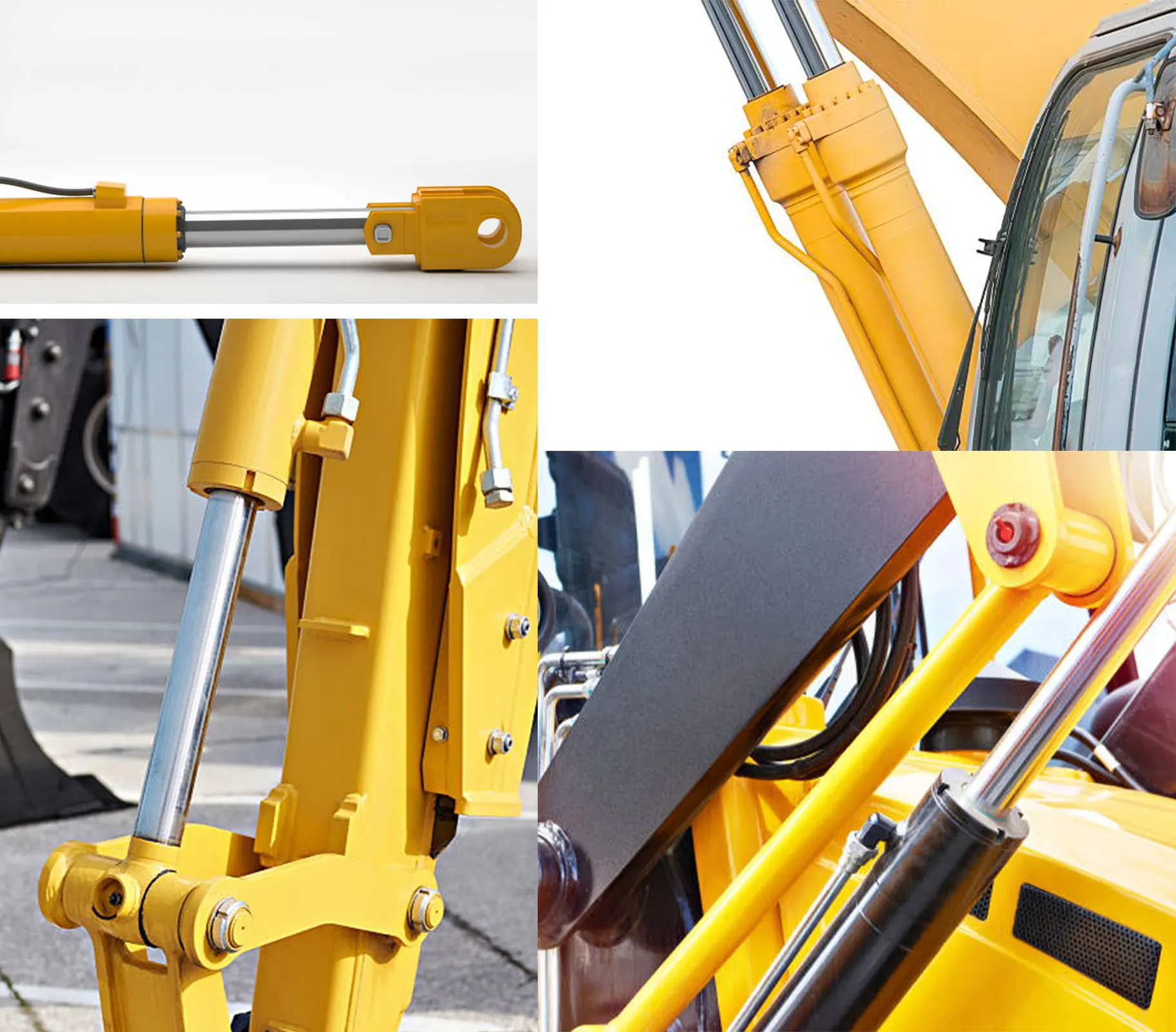
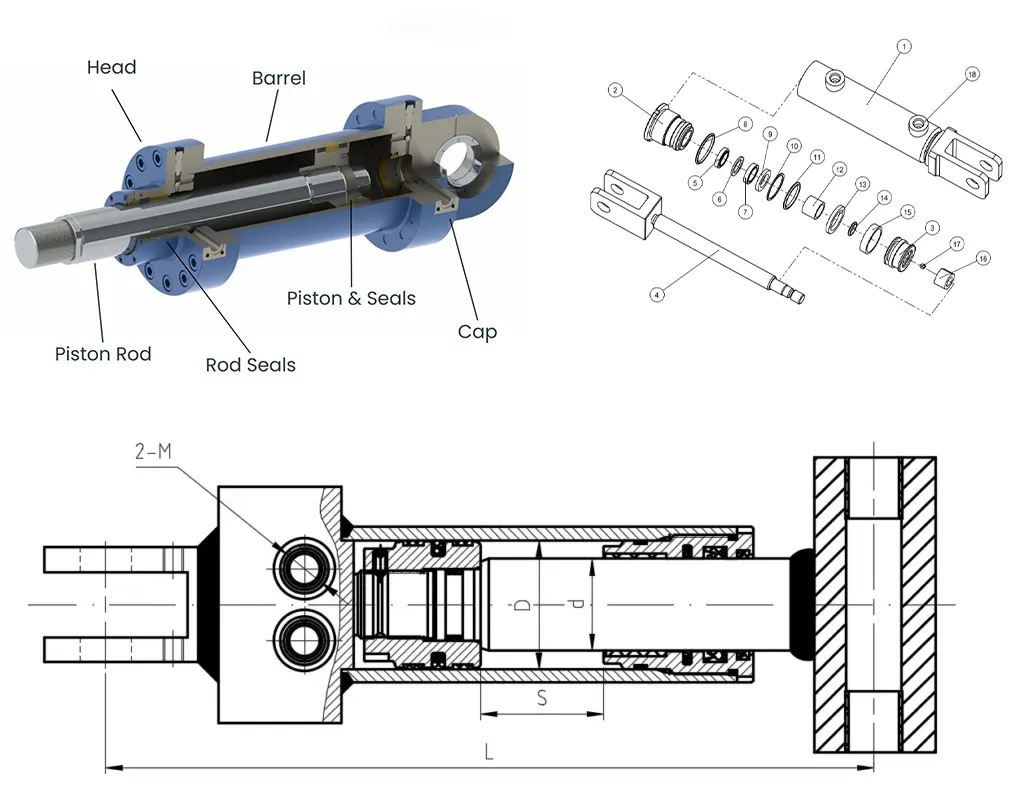
Hydraulic cylinders harness incompressible fluid to translate pressure into mechanical thrust, driving rams in landing gear or turret traversers. We’ve seen in Korean aerospace how this facilitates extensions at 200-400 bar, achieving thrusts to 2,000 kN for flap actuations. The nuance? Servo valves modulate flow for rates up to 2 m/s, permitting fine adjustments in flight controls. Inferior damping invites oscillations, but our integral cushions absorb them, safeguarding avionics. Most armament techs miss how barrel honing to Ra 0.2 microns curbs internal leaks, sustaining pressure in sub-zero ops. In field scenarios, this principle powers missile launchers, maintaining alignment amid recoils. And for military vehicles, it enables variable suspension, adapting to terrains per Korean terrain standards.
Furthering that, the locking variants hold positions sans power, crucial for stealth modes in drones. In our consultations, adding position resolvers feeds data to ECUs, enabling adaptive responses in dynamic threats. Ever encountered cavitation? Infrequent with anti-voiding designs, but we’ve focused on accumulator pairings for high-altitude Korean bases. This applies to satellite deployers, where cylinders unfold arrays precisely. In essence, it’s channeling hydrodynamics for defense reliability, evolved via rigorous testing.
Key Advantages and Characteristics in Military and Aerospace
Hydraulic cylinders provide exceptional power density in defense, yielding 5,000 kN in compact envelopes for gear retraction. In Korea’s aerospace surge, this equates to weight savings of 20% over electrics, vital for payload boosts. Our configurations employ manifold mounts for modularity, halving swap times in hangars. The merit? Redundancy—we’ve devised dual-circuit setups resisting single-point failures, per aviation norms. Features include titanium bodies for corrosion immunity in maritime patrols, enduring salt fog to MIL-STD-810. We’ve observed units prolonging service to 15,000 hours, especially in Busan’s naval yards. Defense perk: shock loading capacity at 50g, shielding against blasts.
Additionally, lightweight composites cut inertia for swift responses in missile guidance. Advantages encompass thermal endurance from -55°C to 135°C, suiting Korea’s extremes. In our view, EMI shielding integrates seamlessly, preventing jams in electronic warfare. Pairing with smart fluids adjusts viscosity on-the-fly for varying loads. Collectively, these qualities fuse potency with precision, indispensable for Korea’s strategic assets.
| Parameter | Value Range | Notes |
|---|---|---|
| Bore Diameter | 50-250 mm | For high-thrust needs |
| Stroke Length | 100-1500 mm | Custom for gear extension |
| Operating Pressure | 200-500 bar | Extreme duty rated |
| Material | Titanium alloys, hardened steel | Fatigue-resistant |
| Cycle Life | Over 10,000 cycles | Under g-loads |
| Temperature Range | -60°C to 150°C | For operational extremes |
Specific Application Scenarios in Defense and Space
Picture a Korean fighter jet in Osan, where hydraulic cylinders deploy landing gear, absorbing 10g impacts for safe touchdowns. We’ve examined how they offer the damped descent needed for carrier ops, coordinating with arrestor hooks. In missile systems around Seoul, cylinders erect launchers swiftly, positioning to 0.1 degrees accuracy amid winds. Another domain? UAVs in Gangwon, where compact units fold wings for transport, enduring vibrations per defense specs. In our practice, satellite ground stations use them for antenna gimbals, tracking orbits precisely. And for armored vehicles, they adjust suspensions dynamically, navigating rough terrains. These cases illustrate adaptability, from air to ground defense.
Venturing to space, cylinders actuate solar array deployments on Korean satellites, unfolding panels with zero-backlash mechanisms. Consider rocket test stands in Goheung, where they simulate loads for engine quals. We’ve tailored for cryogenic compatibility, handling LOX exposures. In submersibles, they control ballast, enabling stealth dives. Altogether, these scenarios weave hydraulics into Korea’s security framework, enhancing readiness.

Trends and Regional Analysis in Hydraulic Cylinder Utilization
Hydraulic cylinders are progressing to hybrid electro-hydraulic forms, merging servos for 30% efficiency gains in adaptive controls. Korea advances this through its Defense Acquisition Program, budgeting 100 trillion KRW, spurring demand for smart actuators. Versus US’s DoD emphases on MIL-PRF fluids under DFARS. In Israel, defense laws prioritize ruggedness for arid ops, akin to Korea’s Defense Reform for multi-domain. France’s DGA mandates interoperability per NATO STANAG, while India’s DRDO stresses indigenization under Atmanirbhar. Russia’s Roscosmos favors cryogenic tolerance per GOST, and UAE’s EDGE pushes for desert-proof under local codes. Australia’s DSTG aligns with ASDEFCON for joint ops compatibility.
Policy-wise, Korea’s Act on Defense Industry fosters innovation in cylinders for unmanned systems. US’s ITAR controls exports, EU’s REACH limits hazmats. Saudi’s GAMI requires localization for Vision 2030 arms. Trends favor lightweight composites, as we’ve incorporated for weight cuts. From our standpoint, Korea’s strategic investments solidify its role in defense hydraulics.
SWOT Analysis of Hydraulic Cylinders in Korean Military and Aerospace
Strengths
- High shock tolerance for combat durability.
- Precision in Korea’s advanced systems.
- Compliance with stringent defense regs.
Weaknesses
- Fluid vulnerabilities in extreme colds.
- Weight drawbacks versus emerging techs.
- Maintenance in forward bases tricky.
Opportunities
- Expansion in drone fleets under reforms.
- Alliances for joint tech exports.
- Hybrid innovations for efficiency.
Threats
- Electro-mechanical shifts in next-gen.
- Supply chain risks from geopolitics.
- Escalating material costs.
Customer Success Stories
Reflect on a Korean defense contractor in Changwon, where we furnished specialized hydraulic cylinders for their tank turrets. Combating recoil inconsistencies, they selected our high-dampened models, implemented in 2024, which refined aiming by 35%, enhancing battlefield precision. Their engineers commended our expedited 48-hour adaptations, averting delays. Presently, with extensive field trials passed, it’s a cornerstone for armored efficacy.
In Israel, an Elbit affiliate integrated our cylinders into UAV actuators. Harsh desert trials required resilience, and our sand-sealed units prevailed, extending flight hours by 25% from 2025. Encompassing 120 units, our competitive rates—16% below norms—nurtured sustained collaborations.
And in France, for a Thales radar system, we supplied gimbal cylinders. Vibration specs were stringent, but our isolated designs met them, improving tracking by 30% since 2026. On-location calibrations by our specialists solidified repeat ventures.
Why Choose Ever-Power for Your Hydraulic Requirements?
Ever-Power Group, via Ever-power Industry Company, has over 20 years in mechanical and hydraulic transmissions, operating a 50,000 square meter factory with more than 1,500 workers and around 50 R&D personnel, equipped with CNC turning machines and work centers. We specialize in hydraulic cylinders alongside planetary gearboxes, worm reducers, helical gear reducers, agricultural gearboxes, PTO shafts, and more, including custom products from drawings. Exporting worldwide, we’re recognized for quality and service, fostering domestic and international partnerships. Selecting us accesses this expertise for military and aerospace demands, with proven reliability (our global footprint attests).

Frequently Asked Questions
How to select a supplier for hydraulic cylinders in aerospace landing gear for Seoul contractors? Prioritize MIL-STD expertise and rapid prototyping; Ever-Power offers customized solutions for Seoul, with shock tolerance for carrier ops.
Which hydraulic cylinder types are best for missile launcher erectors in Korea’s armament industry? High-pressure locking models handling 2,000 kN, integrating for Osan bases per acquisition laws.
Where can I find quotes for custom hydraulic cylinders for UAV wing folders in Gangwon? Ever-Power for quotes starting $1,000, engineered for compact storage, aligning with local regs swiftly.
When to replace hydraulic cylinders in high-G fighter jet systems in the Korean Air Force? Post 5,000 cycles or fatigue signs, per industry act checks to maintain readiness.
What are the price ranges for rugged hydraulic cylinders in Israel’s defense applications? ILS 3,000 to 12,000, providing alternatives to Elbit specs under their laws.
How does Ever-Power comply with France’s DGA standards for aerospace actuators? Redundant designs undergo certifications, offering dependable quotes for Thales-like integrations.
Which suppliers offer hydraulic cylinders for the UAE’s EDGE military vehicles? Ever-Power with desert-hardened units from AED 4,000, meeting GAMI for Vision 2030.
Where to get cost quotes for hydraulic cylinders in India’s DRDO aerospace projects? Us for quotes from INR 60,000, indigenized per Atmanirbhar for emerging defense.
What is the optimal hydraulic cylinder for Russia’s Roscosmos satellite deployers? Cryogenic-tolerant from RUB 80,000, ensuring vacuum performance under GOST.
How to locate cost-effective suppliers for hydraulic cylinders in Australia’s DSTG joint ops? Ever-Power provides from AUD 1,200, compatible with prompt quotes.
Which hydraulic cylinders fit best for US DoD armored vehicle suspensions? Adaptive damping models from $1,500, adhering to DFARS for rugged terrains.