Ladle Tilting Cylinder For Ladle Refining
Conquer the extreme thermal and mechanical demands of modern secondary metallurgy. Our heavy-duty actuation solutions prevent catastrophic weld cracking, resist high-temperature molten steel, and secure absolute precision during your tilting refining operations.
Product Overview: The Absolute Core of Metallurgical Safety
In the highly complex and physically dangerous environment of secondary metallurgy, the ladle refining furnace (LRF) serves as the critical junction where the exact chemical composition, homogenization, and temperature of high-grade steel are finalized. During this indispensable phase of production, massive refractory-lined ladles—often holding several hundreds of tons of liquid metal—must be manipulated, transported, and poured with millimeter precision. The primary mechanical subsystem responsible for executing this controlled pouring of high-temperature molten steel into the continuous casting tundish is governed entirely by the Ladle tilting cylinder. The operational parameters within the melt shop are completely unforgiving. A sudden mechanical hesitation, an internal fluid pressure drop, or a structural yield during the tilting phase does not merely cause an inconvenient production delay; it creates immediate, catastrophic hazards involving uncontained liquid steel spilling onto the facility floor.
Ordinary fluid power systems and standard commercial catalogue actuators fail incredibly rapidly in these specific environments. The primary destructive forces acting upon the equipment are extreme radiant heat from the molten steel bath, highly abrasive airborne metallic dust, and massive, shifting cantilever loads. When a fully loaded ladle is tilted to begin pouring or deslagging, the center of gravity continuously changes. This dynamic shifting exerts terrifying bending moments and radial forces directly onto the trunnions and mounting clevises of the actuator. In standard commercial cylinders, this specific dynamic load manifests as severe stress concentrations at the mounting points, inevitably leading directly to the most common and dangerous failure mode observed in this application: weld cracking. Once a structural weld cracks under heavy load, the entire hydraulic cylinder loses its physical integrity, causing a highly dangerous load drop and massive fire-resistant fluid leaks.
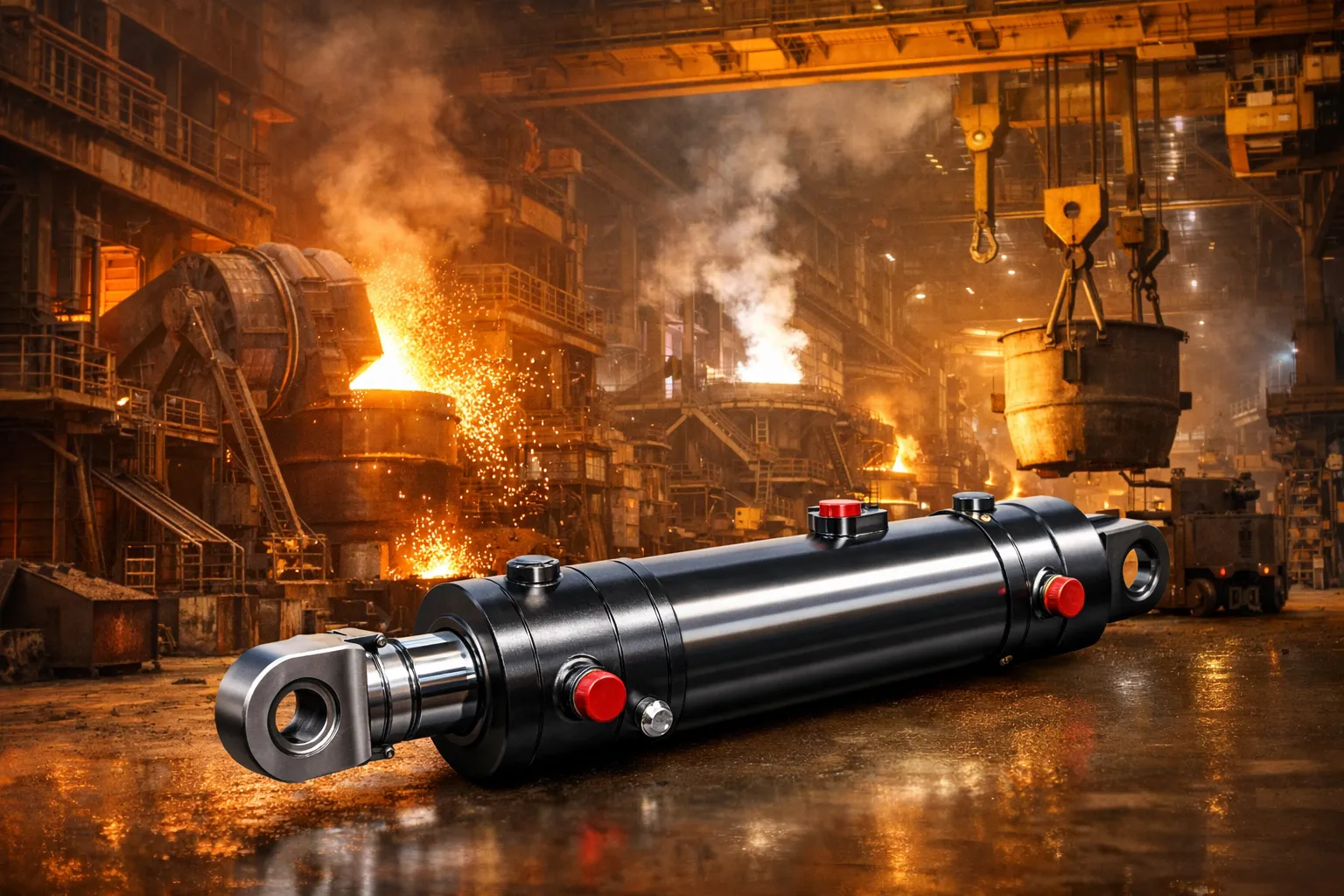
Recognizing this universal industry vulnerability, our engineering division has completely reimagined the architecture of the Ladle tilting hydraulic cylinder. Our unique product positioning focuses exclusively on heavy-duty reliability and zero-defect structural integrity. By utilizing forged high-strength steel for the primary barrel structure and employing deep-penetration heavy-duty welding techniques, we completely eliminate the risk of weld shear and mount fracturing. Furthermore, we protect the critical hydraulic cylinder piston rod with an advanced nickel-plated surface treatment that effortlessly withstands the extreme ambient temperatures and rejects the adherence of molten slag. Plant directors, safety officers, and heavy maintenance superintendents across South Korea, Japan, Taiwan, and the broader East Asian heavy industry corridor specify our premium hydraulic parts to guarantee their plant’s safety. By installing an actuator specifically engineered for the brutal realities of tilting refining, steelworks dramatically optimize their long-term hydraulic cylinder price metrics by entirely eradicating the need for emergency structural replacements and unplanned furnace downtime.
Comprehensive Technical Parameters and Engineering Range
Proper integration into a massive ladle turret, transfer car, or refining tilting stand requires exact dimensional conformity and uncompromising structural parameters. No two steel mills possess the exact same mechanical linkages, pivot geometries, or central hydraulic flow capacities. Therefore, we provide a highly adaptable, custom engineering platform to ensure our solutions integrate flawlessly into your existing heavy machinery infrastructure. The detailed data matrix below clearly outlines the primary configurations and the expansive customizable boundaries of our metallurgical actuators.
| Critical Engineering Parameter | Standard Specification & Highly Customizable Range |
|---|---|
| Primary Industry Sector | Metallurgy / Primary and Secondary Heavy Steel Production |
| Equipment Category | Ladle Refining Furnace (LRF) / Tundish Cars / Vacuum Degassing Stations |
| Subsystem / Kinematic Action | Ladle tilting / Precision pouring, deslagging, and angular positioning |
| Hydraulic Cylinder Designation | Ladle tilting cylinder (Also universally specified as Ladle tilting hydraulic cylinder) |
| Actuation Method | Double acting hydraulic cylinder (Providing massive, locked force in both extension and retraction) |
| Internal Structure Type | Piston cylinder (Engineered for incredibly heavy linear force distribution and side-load resistance) |
| Manufacturing Architecture | Welding (Fully automated, deep-penetration heavy structural assembly) |
| Core Material System | High-strength steel (Specifically forged for maximum yield strength against shifting radial loads) |
| Surface Treatment Protocol | Nickel plating (Forms an amorphous, highly ductile barrier against heat checking and oxidation) |
| Environmental Operating Rating | High-temperature molten steel proximity, severe radiant heat, acidic fluxes, and abrasive slag dust |
| Primary Operation Condition | Tilting refining |
| Targeted Failure Mode Prevention | Catastrophic weld cracking and mount shearing caused by shifting center of gravity loads |
| Primary Recommended Configuration | Heavy-duty welding combined with high-temperature FKM thermal sealing packages |
| Heavy Mounting Connections | Massive Trunnion blocks, Heavy Duty Rear Clevis, or Custom Flanges (Machined from solid billets) |
Advanced Fluid Mechanics and Core Working Principle
Deeply understanding the exact fluid kinematics of the tilting stand is absolutely paramount to appreciating the necessity for heavily reinforced actuator design. The operational sequence of the Ladle tilting hydraulic cylinder demands absolute spatial precision. Because gravity constantly threatens to pull the incredibly heavy ladle downward unpredictably, this system must function exclusively as a heavy-capacity double acting hydraulic cylinder. This configuration utilizes pressurized, fire-resistant hydraulic fluid (such as water-glycol or synthetic phosphate ester) to physically drive the massive mechanical pivot arms holding the ladle, providing active, positive force during both the extension and the retraction phases of the cycle.
When the secondary refining process is complete and the molten steel is ready for continuous casting, the operator initiates the tilt sequence from the safety pulpit. Instantly, the main proportional directional control valves shift, directing high-pressure fluid into the cap end (blind end) of the thick-walled steel barrel. This fluid exerts immense hydrostatic pressure evenly across the massive surface area of the hydraulic cylinder piston. As the internal fluid pressure overcomes the static inertia of the fully loaded ladle, the piston rod slowly extends. During this extension, the physical geometry of the tilting mechanism dictates that the cylinder will experience severe off-axis side-loads. The high-strength steel barrel and the heavily reinforced, elongated guide glands act in unison to absorb this radial stress, ensuring the rod does not bend or severely score the internal honed surfaces under the crushing weight.
The most critical aspect of this movement is ultra-smooth articulation. If the cylinder were to experience “stick-slip” friction (a jerky, stuttering movement caused by degraded seals or scored rods), it would create a kinetic wave within the molten steel, potentially causing a highly dangerous spill over the lip of the ladle. Our advanced low-friction sealing architecture ensures a perfectly linear, controlled pour. Once the ladle is empty and deslagged, the hydraulic circuit logic reverses. Fluid is pumped into the rod end port while the cap end vents, utilizing the retracting force of the hydraulic rams to safely pull the heavy empty vessel back to its upright, secure resting position. This complete, highly stressful cycle is repeated flawlessly thousands of times every year, safeguarded entirely by our superior metallurgical engineering.
Seamless Direct Replacement for Global Fluid Power Brands
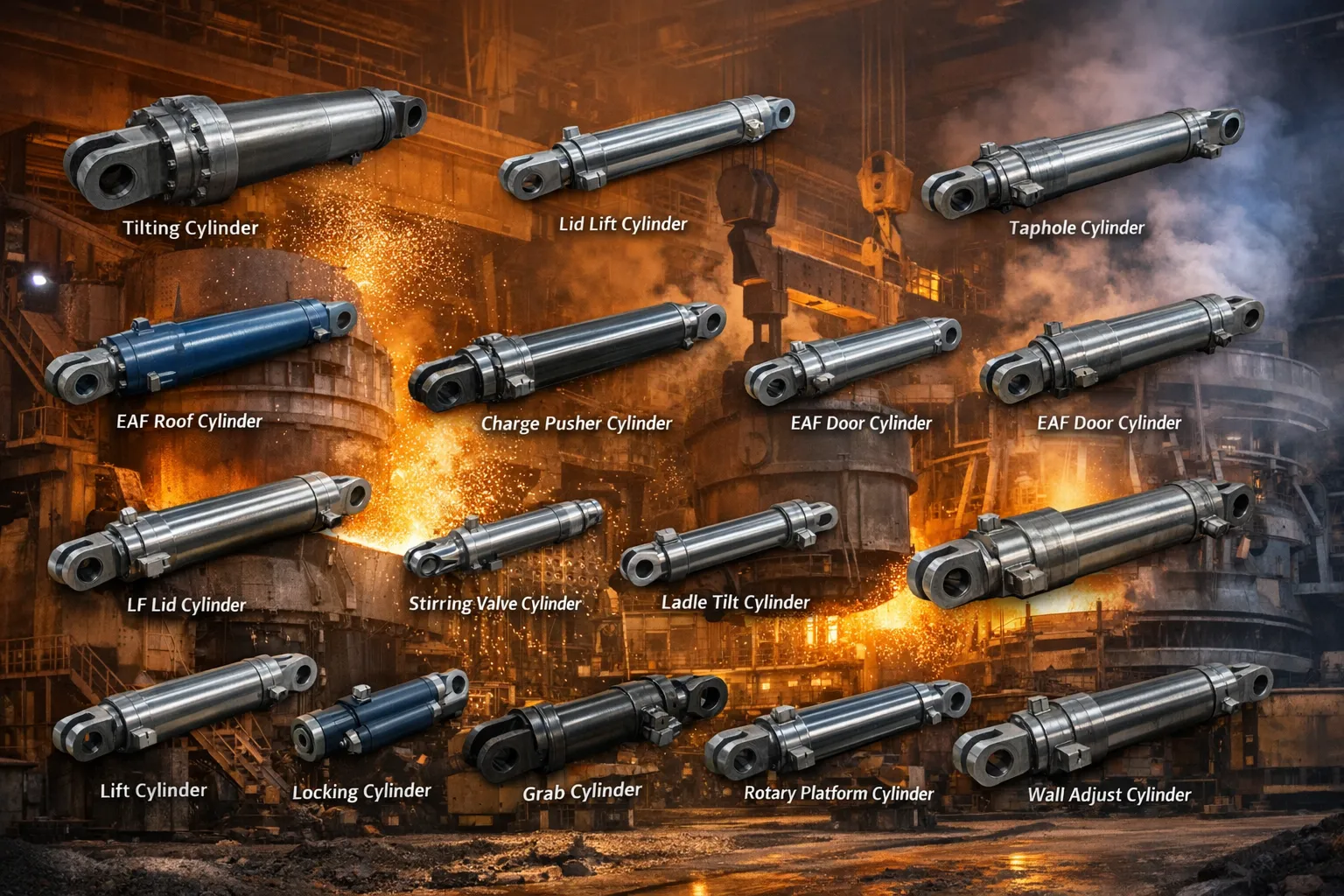
During a tightly compressed maintenance shutdown in a bustling steel mill, engineering departments simply do not have the luxury of time to redesign massive structural steel frameworks or cut off existing mounts just to accommodate a non-standard fluid power component. Acknowledging this harsh industrial reality, our specialized design bureau has systematically engineered our entire Ladle tilting cylinder series to conform strictly and exactly to global heavy-duty mounting standards, including ISO 6022, ISO 6020, and heavy DIN 24333 specifications. This rigid adherence to international dimensional profiles guarantees that our upgraded actuators serve as immediate, direct-fit drop-in replacements for failing original equipment.
We possess the extensive technical archives, proprietary CAD blueprints, and precision machining capability to perfectly and seamlessly cross-reference and replace legacy machinery originally manufactured by renowned global fluid power brands such as Bosch Rexroth, Parker Hannifin, Eaton Vickers, Hydac, and SMC.
(Please explicitly note: The mention of these highly respected industrial manufacturing brands is provided strictly to assist your plant engineering personnel in identifying correct mounting dimensions, confirming exact stroke lengths, and facilitating accurate technical cross-reference. We operate proudly as a premium, totally independent custom manufacturer, and this reference does not imply any direct commercial affiliation, formal endorsement, or trademark infringement regarding those specific corporate entities.)
When heavy maintenance supervisors evaluate the massive labor and downtime costs associated with constantly fixing hydraulic cylinders that repeatedly fail at the welds under heavy radial loads, they quickly realize the financial futility of rebuilding a fundamentally inadequate OEM design. Upgrading your systems to our heavily welded, high-strength steel replacement units allows your facility to completely bypass the necessity of expensive structural modifications. You receive an engineered component that mounts perfectly onto your existing heavy trunnion pins, instantly curing the root cause of the mechanical failure.
Five Core Technical Advantages for Supreme Metallurgical Reliability
What specific physical engineering attributes separate our specialized heavy-duty actuators from standard commercial cylinders found in generic parts catalogs? The definitive difference lies in targeted, uncompromising metallurgical science designed to counter very specific failure modes. We do not build generic fluid power parts; we engineer definitive solutions to the exact mechanisms destroying equipment in your ladle refining area. Below are the five foundational engineering advantages integrated directly into our product:
- 1.Heavy-duty welding Protocols to Eliminate Cracking: The primary failure mode in ladle tilting is catastrophic weld cracking due to shifting loads. Standard cylinders use basic 45# carbon steel and superficial welding passes. We exclusively utilize forged high-strength steel alloys for the barrel and heavy mounts. Our automated Submerged Arc Welding (SAW) process achieves 100% deep root penetration. Post-weld, the entire assembly undergoes critical stress-relief heat treatment in a specialized furnace, fundamentally eliminating the residual thermal stresses that cause standard welds to shear under radial tension.
- 2.High-temperature Nickel plating Technology: The ambient environment near molten steel features intense radiant heat that causes standard hard chrome plating to micro-fracture and oxidize rapidly. Furthermore, any liquid steel spatter sticks tightly to chrome. We deploy an advanced electroless nickel plating process that deposits an entirely amorphous, non-porous layer onto the piston rod. This highly ductile shield effortlessly handles thermal expansion without cracking, aggressively resists high-temperature oxidation, and maintains a perfectly smooth surface that rejects slag adhesion.
- 3.High-strength steel Core Rigidity: As the massive ladle pivots, the cylinder rod acts as a lever, subjected to severe side-loads. Ordinary carbon steel will permanently deform, bow, or buckle under this intense stress. We forge our barrels and rods from premium high-strength steel alloys featuring massive yield strength. This ensures absolute geometric stability, preventing the rod from bending and stopping the piston from causing destructive friction against the internal barrel walls.
- 4.Ultra-Low Friction Thermal Sealing Architecture: To prevent dangerous “stick-slip” vibrations during the pouring of liquid metal, the cylinder must move with absolute fluidity. We engineer the internal hydraulic cylinder components with highly specialized Polytetrafluoroethylene (PTFE) composite seal rings combined with high-temperature fluoroelastomer (FKM/Viton) energizers. This proprietary combination ensures extremely low breakout friction and continuous, smooth linear actuation, preventing fluid bypass even at 220°C.
- 5.Thermal Stability and Fluid Over-Engineering: Extreme ambient heat attempts to bake the fire-resistant hydraulic fluid trapped inside the cylinder barrel, leading to fluid coking and seal destruction. We intentionally over-engineer the internal porting diameters and fluid flow channels. This critical design choice maximizes the rapid volumetric exchange of fluid during every stroke, creating a high-volume flushing effect that continuously pulls destructive radiant thermal energy away from the vulnerable rod gland seals.
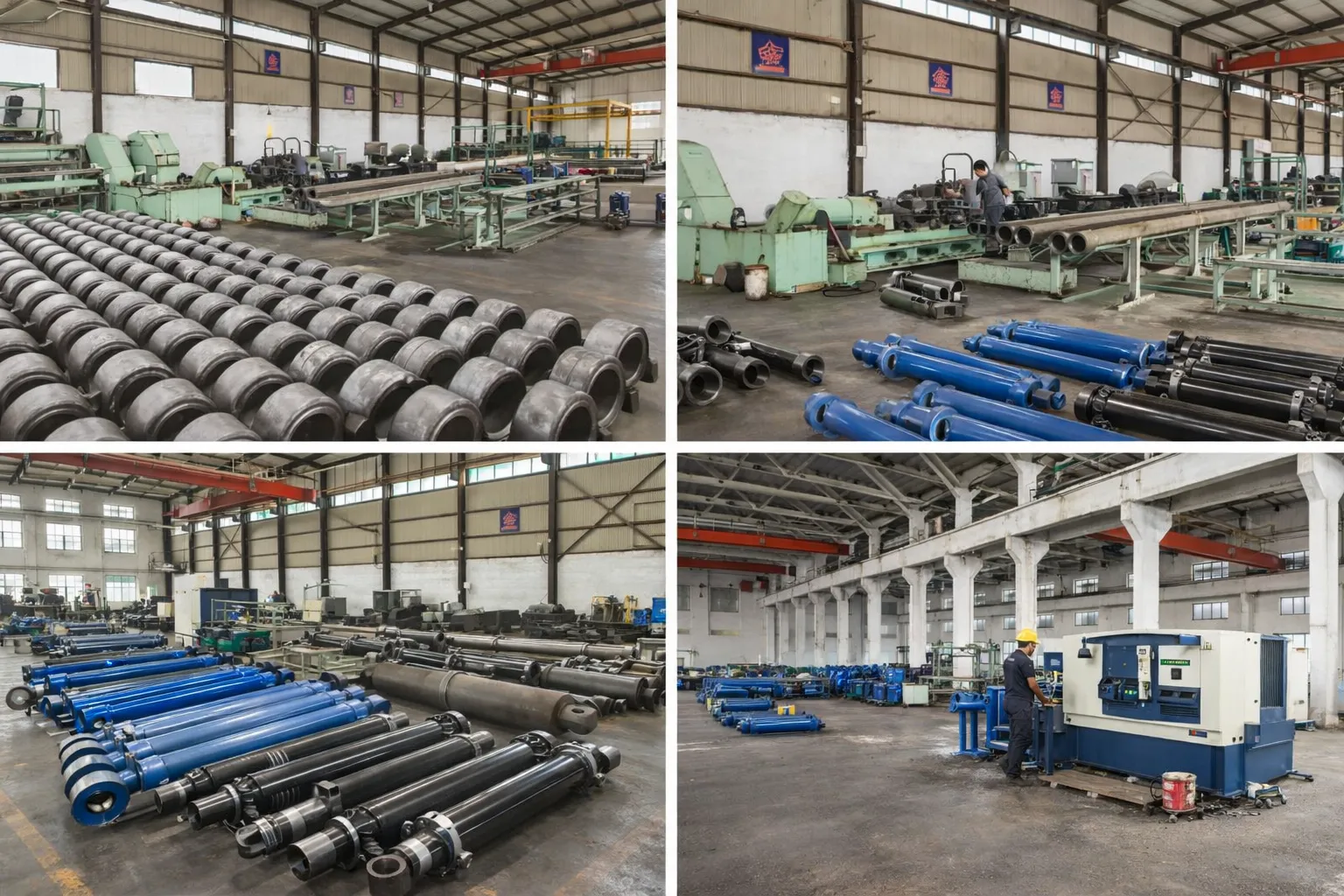
Autonomous Manufacturing and Unyielding Quality Control
Absolute reliability in primary heavy industry requires total, unbroken control over the entire production ecosystem. We strictly reject the fragmented, outsourced supply chain model. Operating as a completely vertically integrated engineering manufacturer, every single phase of fabrication—from the initial ultrasonic verification of the raw high-strength steel forgings to the final high-pressure testing protocols—is executed, monitored, and meticulously documented under strict ISO 9001 quality management standards entirely within our own advanced production facilities.
The uncompromising manufacturing sequence begins with multi-point ultrasonic flaw detection of the steel billets to guarantee absolute internal structural integrity without a single microscopic void. Following extreme precision heavy CNC turning, the cylinder barrels are subjected to a proprietary, multi-pass deep-hole skiving and roller burnishing process. This achieves an internal mirror-like surface finish (Ra 0.15 to 0.3 micrometers), which is absolutely vital for maximizing the operational lifespan of the high-temperature PTFE piston seals. The heavy structural welds binding the trunnions and end caps are then verified through comprehensive non-destructive radiographic (X-ray) and magnetic particle inspections to guarantee absolute resistance to weld cracking under operational loads.
Before final coating and global dispatch, 100% of our produced units are subjected to severe, computerized hydrostatic factory testing. We intentionally pressurize every single Ladle tilting hydraulic cylinder to a massive 150% of its maximum rated operational pressure, utilizing highly sensitive digital transducers to detect even the most microscopic pressure drops that would indicate internal fluid bypass. Every successfully approved unit is permanently laser-etched with a unique serial identifier, granting our B2B partners complete material traceability and immediate access to lifetime technical documentation. This systematic philosophy toward zero-defect engineering drastically minimizes the constant need for complex hydraulic cylinder repair on your factory floor.
Expansive Cross-Industry Technical Applications
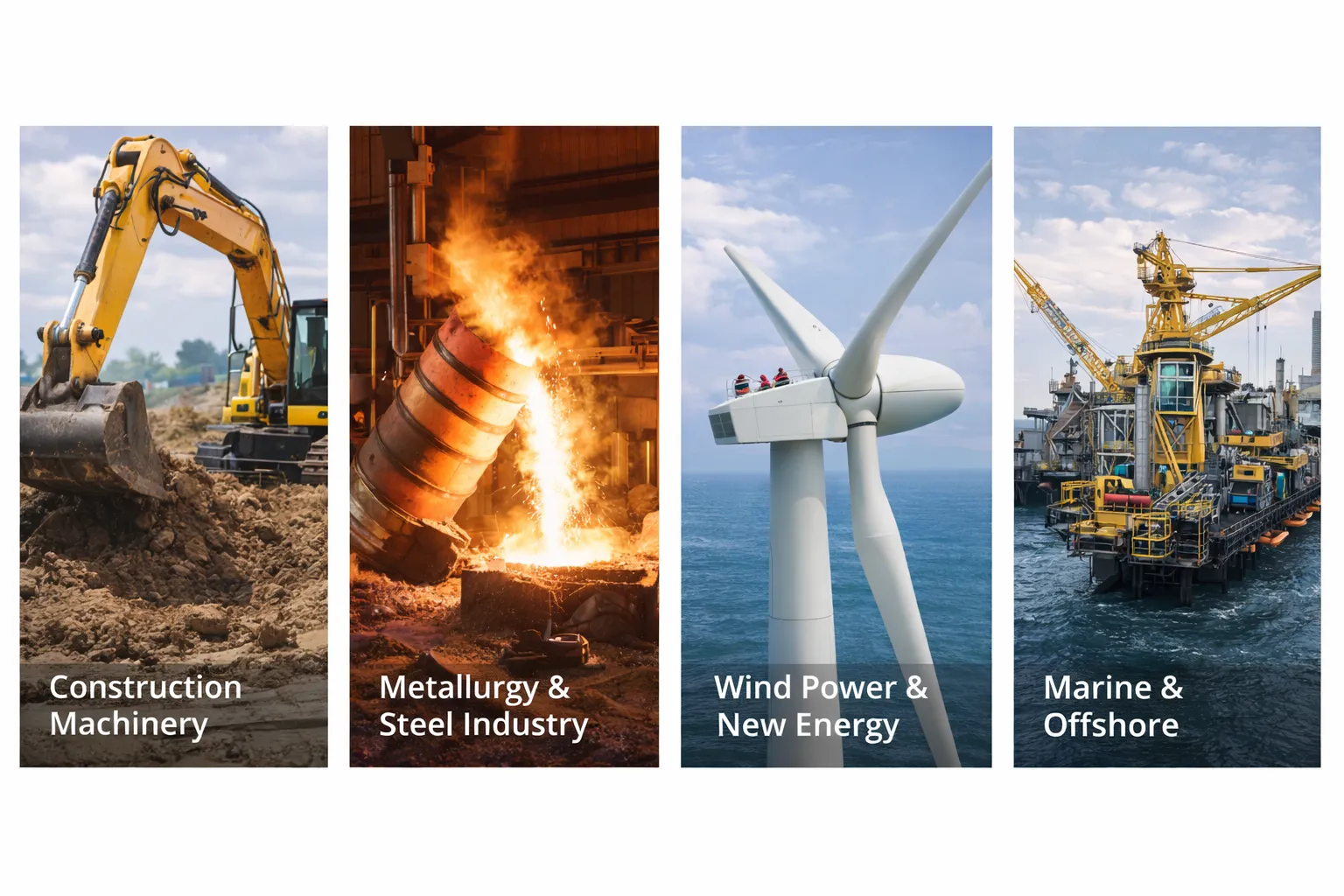
While this ultra-heavy-duty welded architecture is heavily optimized to conquer the devastating bending moments and extreme heat of metallurgical tilting refining, the core engineering principles of supreme yield strength and zero structural deflection translate perfectly to other extreme-duty industrial sectors. Any heavy environment facing massive cantilever loads, severe continuous vibration, and highly abrasive airborne particulates can vastly benefit from integrating our fluid power advancements.
Naturally, our deepest core expertise continuously supports the rigorous demands of the Metallurgical and Iron Industry. However, far beyond the steel mill deck, the immense structural rigidity of our fully welded designs makes them an exceptionally valuable upgrade for heavy earthmoving equipment. They function seamlessly as nearly indestructible lift cylinder units for massive mining excavators, heavy wheel loaders, and tunnel boring machines, where unpredictable side-loading forces constantly threaten to snap standard commercial components. Discover our incredibly resilient linear solutions engineered explicitly for the Construction Machinery Industry. Furthermore, the advanced dust exclusion profiles and high-load bearing technologies we deploy are critically required in deep-shaft and heavy surface extraction operations. Learn more about our specialized heavy actuators designed to withstand abrasive rock dust and severe mechanical shock in the Mining Industry.
Additionally, our highly customized actuation systems provide flawless, unyielding force for massive plastic and rubber injection molding machinery, operate continuously within automated port logistics and material handling equipment, drive specialized renewable energy applications including heavy wind turbine pitch mechanisms, and dominate in harsh offshore marine platforms where maximum reliability and salt-spray resistance is simply non-negotiable.
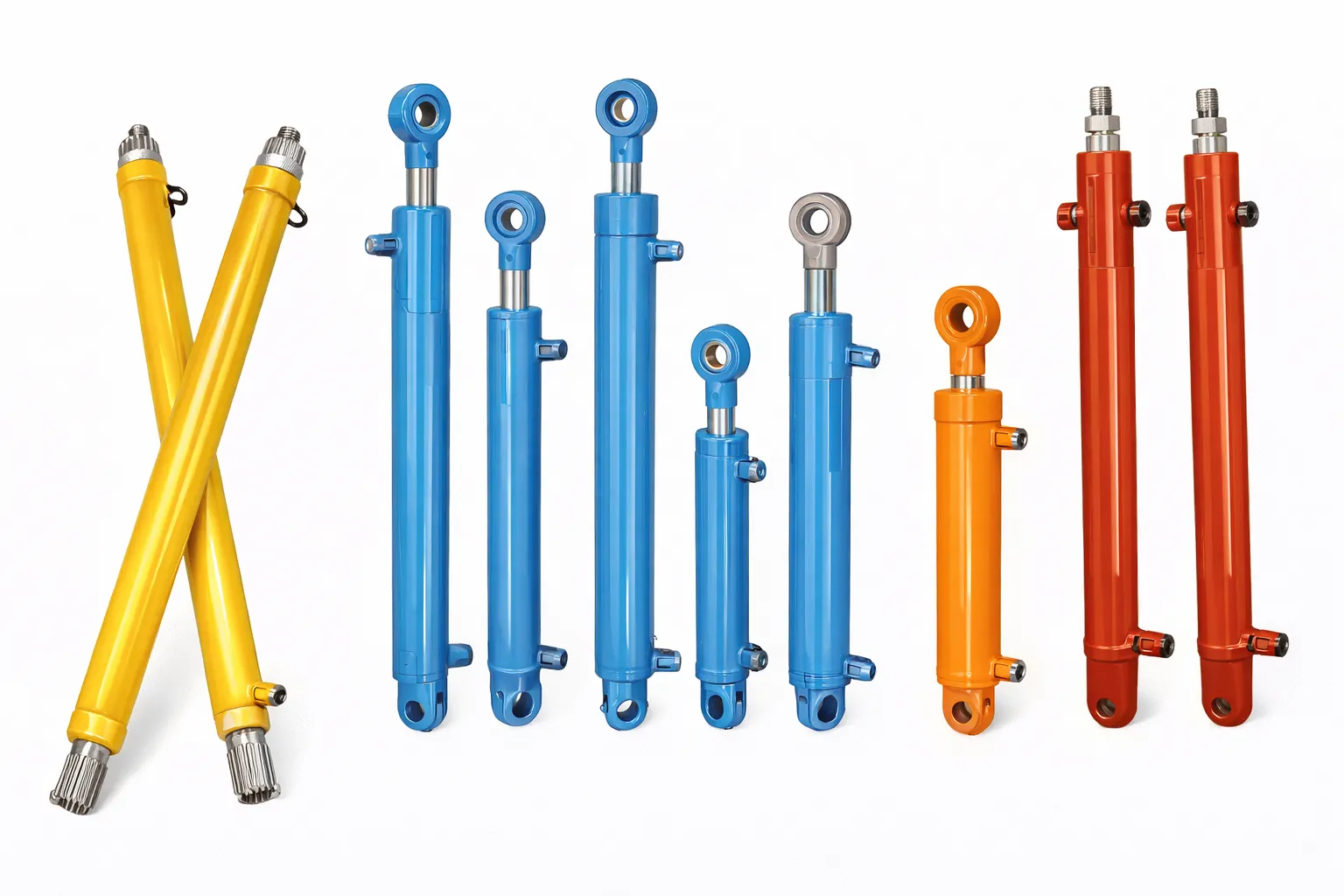
Comparative Analysis: Standard Hydraulics vs. Our High-Performance Solutions
For corporate procurement officers and chief reliability engineers, the final purchasing decision always involves intelligently balancing the initial capital expenditure against the massive, crippling long-term costs of unplanned metallurgical downtime. To definitively articulate our engineering value proposition, the following analytical table highlights the profound physical differences between relying on standard commercial components and deploying our heavily armored, specialized actuator.
| Critical Performance Metric | Standard Commercial Hydraulic Cylinder | Our Specialized Ladle Tilting Cylinder |
|---|---|---|
| Primary Structural Material | Basic 45# Carbon Steel (Highly susceptible to heavy mechanical yield and deflection) | Forged High-strength steel Alloy (Exceptional yield strength against radial loads) |
| Manufacturing Architecture | Standard Tie-Rod or Light Welding (Vibration causes stretching; welds shear easily) | Heavy-duty welding / SAW (Fully stress-relieved to absolutely prevent cracking) |
| Rod Surface Protection | Standard Hard Chrome (Micro-cracks rapidly expand and oxidize under high radiant heat) | Proprietary Nickel plating (Amorphous shield entirely resists heat checking and oxidation) |
| Actuation Smoothness | Prone to “stick-slip” friction as cheap seals harden (Causing dangerous ladle jerking) | Ultra-Low Friction PTFE/FKM Sealing (Ensures perfectly smooth, linear pouring action) |
| Dominant Failure Mode | Catastrophic weld cracking at the trunnion leading to immediate structural collapse | Highly predictable internal seal wear occurring only after millions of safely controlled cycles |
| Average Expected Lifespan | 3 to 6 months before requiring dangerous emergency welding repairs or full replacement | 24 to 48+ months continuous (Drastically lowering the plant’s Total Cost of Ownership) |
Proven in the Field: 5 Industrial Engineering Case Studies in Asia
True engineering credibility is forged entirely on the brutal production floor. Our custom technical solutions consistently drive operational safety and stability across major metallurgical hubs globally, with a profound dominance in the East Asian market. Below are five highly detailed, real-world deployments demonstrating exactly how our interventions permanently solved critical plant failures.
Case Study 1: Eradicating Trunnion Weld Cracking in Pohang
Location & Valued Client: Major Integrated Steelworks Facility, Pohang, South Korea.
Application Context: 250-ton ladle refining turret requiring ultra-smooth, high-load tilting capabilities.
Initial Connection: The plant’s heavy engineering procurement team located our technical specifications via a targeted search for a specialized actuator manufacturer in April 2024.
The Challenge: The massive shifting center of gravity of the 250-ton ladle was exerting terrifying bending moments on their standard actuators. The original OEM cylinders were constantly suffering from catastrophic weld cracking at the heavy trunnion mounts, nearly dropping a loaded ladle and forcing monthly emergency shutdowns for structural re-welding.
The Solution & Verifiable Result: We completely redesigned the units, replacing the standard carbon steel with forged high-strength steel alloys and employing deep-penetration, stress-relieved submerged arc welding. Installed in June 2024, the actuators have handled the massive cantilever loads flawlessly for over 20 months without a single micro-fracture appearing during ultrasonic inspections.
“The structural rigidity of these cylinders is phenomenal. We went from fearing a catastrophic load drop every month to completely eliminating weld fatigue from our maintenance reports.” — Senior Reliability Engineer, Pohang
Case Study 2: Eliminating “Stick-Slip” Pouring Hazards in Kitakyushu
Location & Valued Client: Specialty High-Grade Steel Foundry, Kitakyushu, Japan.
Application Context: Precision bottom-pouring ladle transfer car mechanism.
Initial Connection: An international metallurgical consultant recommended our highly sophisticated hydraulic parts specifically to solve their persistent control issues.
The Challenge: The foundry was experiencing highly dangerous “stick-slip” actuation when tilting the ladle to pour. The radiant heat had baked the standard nitrile seals, causing the internal friction to spike. When the cylinder finally moved, it jerked violently, causing high-temperature molten steel to slosh and occasionally spill over the lip of the tundish, creating massive safety violations.
The Solution & Verifiable Result: We engineered drop-in replacement units equipped with our ultra-low friction PTFE sealing composite and high-temp FKM energizers. The specialized seals allowed the cylinders to move with absolute fluidity at extremely slow speeds. The pouring jerks were instantly eliminated, completely stabilizing the continuous casting process.
“The precision control we regained with these upgraded seals is remarkable. The ladle tilts with perfect, glass-like smoothness now, completely securing the safety of the casting deck.” — Foundry Operations Manager
Case Study 3: Defeating Radiant Heat Oxidation in Busan
Location & Valued Client: Heavy Industrial Forging and Smelting Plant, Busan, South Korea.
Application Context: Heavy tilting mechanism on a secondary tilting refining stand.
Initial Connection: Contacted our technical engineering department urgently seeking expert advice on permanently fixing hydraulic cylinders that were failing due to surface corrosion in late 2024.
The Challenge: The ambient heat near the refining stand was so intense that the standard hard chrome plating on the piston rods was suffering from severe thermal checking (micro-cracking). As the steel oxidized underneath the cracks, the chrome flaked off, violently shredding the main gland seals and dumping expensive fire-resistant fluid.
The Solution & Verifiable Result: We replaced the vulnerable chrome plating entirely with our heavy electroless nickel plating technology. During an extensive 16-month routine maintenance inspection in early 2026, the rods were wiped clean and showed absolutely zero heat checking or oxidation, entirely resolving the fluid leak issue.
“Their nickel-plating technology is the only surface treatment we’ve found that actually survives the radiant heat of the ladle. It has completely ended our constant seal blowouts.” — Plant Maintenance Director
Case Study 4: Massive OPEX Reduction in Kaohsiung
Location & Valued Client: Rapidly Expanding Heavy Steel Milling Enterprise, Kaohsiung, Taiwan.
Application Context: Comprehensive plant-wide modernization of all ladle handling and transfer equipment.
Initial Connection: Sourced our engineering expertise through our comprehensive digital catalog while researching ways to drastically optimize their overall annual hydraulic cylinder price and maintenance budget.
The Challenge: The enterprise was heavily burdened by the operational expenditure (OPEX) of constantly replacing cheap, standard commercial cylinders that bent or cracked under the severe heavy-duty cycle of the continuous casting line.
The Solution & Verifiable Result: By deploying our fully optimized high-strength steel actuators equipped with high-temp FKM seals, the plant achieved a certified 400% lifespan improvement over their previous vendors. This massive increase in durability drastically reduced their annual component replacement budgets and eliminated costly emergency downtime.
“The initial investment in premium metallurgy paid for itself within the first eight months. The 4x lifespan improvement has completely revolutionized our predictive maintenance strategies.” — Chief Modernization Architect
Case Study 5: Rapid Emergency Obsolete Part Replacement in Incheon
Location & Valued Client: High-Capacity Scrap Recycling and Smelting Facility, Incheon, South Korea.
Application Context: Main tilting mechanism for an older generation holding furnace.
Initial Connection: Reached out to us urgently via our online portal after their original European OEM quoted an unacceptable 6-month lead time for an obsolete replacement part.
The Challenge: A massive trunnion mount on an obsolete, legacy European system had sheared completely off, halting production. The facility needed a custom-engineered, heavy-duty replacement matching exact non-standard dimensions manufactured and delivered immediately.
The Solution & Verifiable Result: Utilizing reverse-engineering from provided blueprints, we rapidly manufactured a vastly superior replacement using fully welded high-strength steel. The custom double acting hydraulic cylinder was machined, welded, painted, and air-freighted to Incheon within a strict 4-week window, getting the smelting line back up and running months ahead of the OEM schedule.
“Their engineering agility saved us from a catastrophic, multi-month production halt. They delivered a custom, heavily upgraded part faster than the original manufacturer could even process the paperwork.” — Facility Supply Chain Director
B2B Engineering Frequently Asked Questions (FAQ)
Specifying the exact heavy-duty fluid power configurations for a volatile ladle refining deck requires absolute technical clarity and trust. Below, our senior metallurgical engineering team comprehensively addresses the most critical inquiries posed daily by industrial procurement directors and plant maintenance engineers.
Secure Your Critical Refining Operations Today
Do not permit vulnerable commercial components to constantly compromise your production targets or jeopardize the critical safety of your ladle refining deck. Stop continuously pouring maintenance budgets into fixing hydraulic cylinders that were fundamentally never designed to survive this level of heat and severe radial load. Partner with a deeply specialized engineering manufacturer capable of delivering heavily welded, high-strength actuation solutions designed specifically for the extreme realities of your steel mill.
Editor: Cxm