Lift Cylinder for High-Speed Train Carbody
Engineered explicitly for synchronized railway maintenance depots. Integrating proprietary extended rod guides and high-yield 27SiMn alloy steel to completely neutralize lateral vibration, diffuse off-center loads, and eliminate rod wear.
Product Overview: The Core of Railway Maintenance Infrastructure
The operational maintenance of high-speed rail networks across East Asia depends entirely on the mechanical reliability of synchronized underfloor jacking systems. The sheer mass of a passenger locomotive requires exact, perfectly leveled elevation. A failure in the hydraulic system during undercarriage inspection or bogie replacement can cause catastrophic damage to the rolling stock and pose fatal risks to the depot personnel working underneath. At the absolute heart of this complex lifting operation is the lift cylinder. Over my twenty years engineering heavy-duty fluid power systems, I have conducted countless mechanical failure analysis reports on commercial-grade actuators deployed in these specialized depots. The transit environment is brutally unforgiving. Active adjacent tracks produce continuous, high-frequency ground vibrations, while heavy braking and wheel turning saturate the facility air with highly abrasive metallic dust.
When a standard hydraulic cylinder is tasked with lifting a highly rigid, multi-ton train carbody across four or eight distinct lifting points, even a fractional millimeter difference in extension speed among the jacks induces immense lateral side-loads. These unpredictable eccentric forces push the extended steel rod brutally against the internal metal gland, scraping away the protective oil film and causing deep, irreversible metal galling and scoring. This single dynamic is the root cause of premature lifting jack failure in transit depots worldwide.
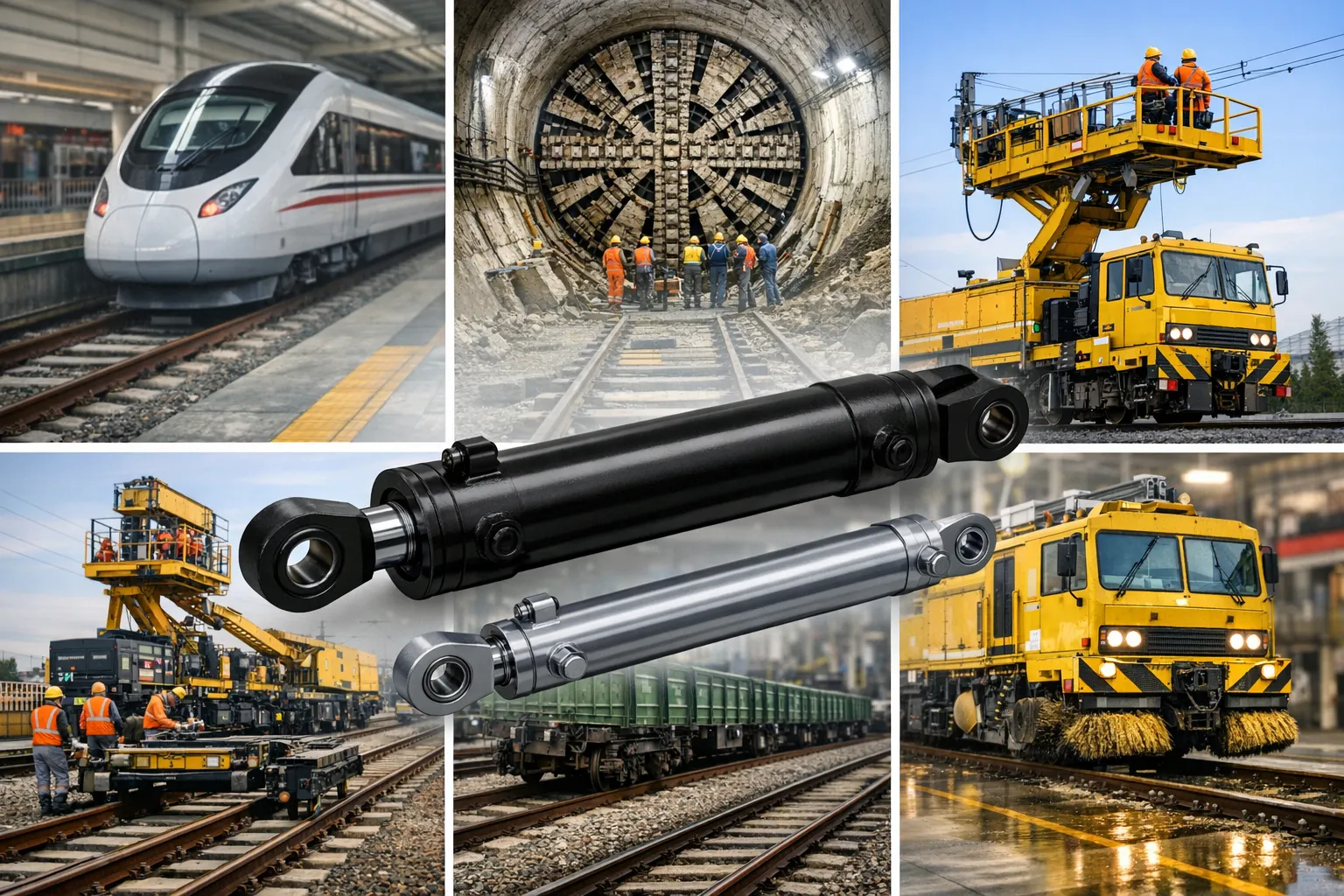
As a highly specialized hydraulic cylinder manufacturer, we have successfully solved this inherent structural flaw. We have purpose-built a specialized double acting hydraulic cylinder featuring a proprietary extended internal guide sleeve mechanism. This elongated bearing surface mathematically diffuses lateral forces, keeping the rod perfectly concentric and virtually eliminating localized rod wear. By prioritizing application-specific engineering rather than mass-market fluid power compromises, we provide transit authorities across South Korea and neighboring regions with unparalleled lifting safety margins and significantly reduce their long-term infrastructure maintenance overhead.
Comprehensive Technical Parameters
Precision engineering begins with rigorous and transparent specifications. To ensure flawless mechanical integration with your existing high-speed train maintenance infrastructure, we offer extensive manufacturing customization within the following operational parameters. These specifications represent the baseline standard for our extreme-duty lift cylinder series.
| Engineering Parameter | Specification Details & Material Data |
|---|---|
| Target Industry Sector | Railway Transit / High-Speed Train Networks / Urban Metro |
| Specific Equipment Category | Carbody Synchronized Lifting Jacks / Underfloor Bogie Drops |
| Subsystem & Action | Synchronized Carbody Elevation |
| Hydraulic Action Mode | Double acting hydraulic cylinder (Powered extension and retraction) |
| Structural Manufacturing | Heavy-Duty Welded Piston Cylinder (Submerged Arc Welded Base) |
| Primary Material System | 27SiMn High-Strength Alloy Steel Tube (High yield threshold) |
| Rod Surface Treatment | Induction Hardened + Hard Chrome Plating (Micro-cracked matrix, 20-30µm) |
| Environmental Tolerance Grade | Severe: Constant Ground Vibration + Heavy Airborne Metallic Dust |
| Primary Failure Mode Addressed | Piston Rod Wear and Seal Crushing induced by lateral eccentric loads |
| Core Engineering Configuration | Extended Guide Sleeve Configuration to absorb radial pressure |
| Standard Operating Pressure | 16 MPa to 31.5 MPa (Optimized for high-tonnage multi-point lifting) |
| Structural Mounting Options | Base Flange, Front Flange, Center Trunnion, Base Clevis (Fully Customizable) |
Fluid Dynamics and Hydromechanical Working Principle
To fully appreciate the operational reliability of this specific double acting hydraulic cylinder, one must deeply understand the complex fluid dynamics and mechanical forces interacting inside the cylinder barrel during a heavy lift. The central hydraulic power unit coordinates the operation, pumping highly pressurized, anti-wear hydraulic oil into the cap end (the blind bottom chamber) of each cylinder in the synchronized array simultaneously. This incompressible fluid exerts a tremendous hydrostatic force against the entire surface area of the internal hydraulic cylinder piston. As the pressure overcomes the massive static load of the train carriage, the 27SiMn alloy steel rod extends upward.
Contrast this advanced mechanism with a basic single acting hydraulic cylinder, which relies entirely on gravity and the weight of the carriage to force the fluid back into the reservoir during retraction. In a double-acting setup, fluid is actively metered into the annular rod end chamber during descent. This powered retraction, precisely governed by flange-mounted counterbalance valves, ensures a smooth, millimeter-accurate lowering of the heavy carriage back onto the bogies, completely avoiding any hazardous “stick-slip” jerking motions that could destabilize the load.
It is during the dynamic lifting phase that the brilliance of our extended guide configuration becomes evident. A suspended train car is an incredibly rigid structure. If one jack lifts even a fraction of a millimeter faster than the others, or if a sudden draft of wind enters the depot, lateral side forces are instantaneously transferred down through the lifting pads and directly into the cylinder rods. In a standard cylinder, this side force creates immense point-pressure, violently crushing the seals and causing the steel rod to scrape against the metal gland. Our specialized extended guide vastly elongates the bronze and composite bearing surface within the cylinder head. By dramatically increasing the contact area, the localized pressure is reduced well below the critical threshold that would break the lubricating oil film. The rod is held perfectly centered, gliding outward without any metal-to-metal contact, completely neutralizing the threat of rod wear.
Seamless OEM Equipment Replacement & Dimensional Integration
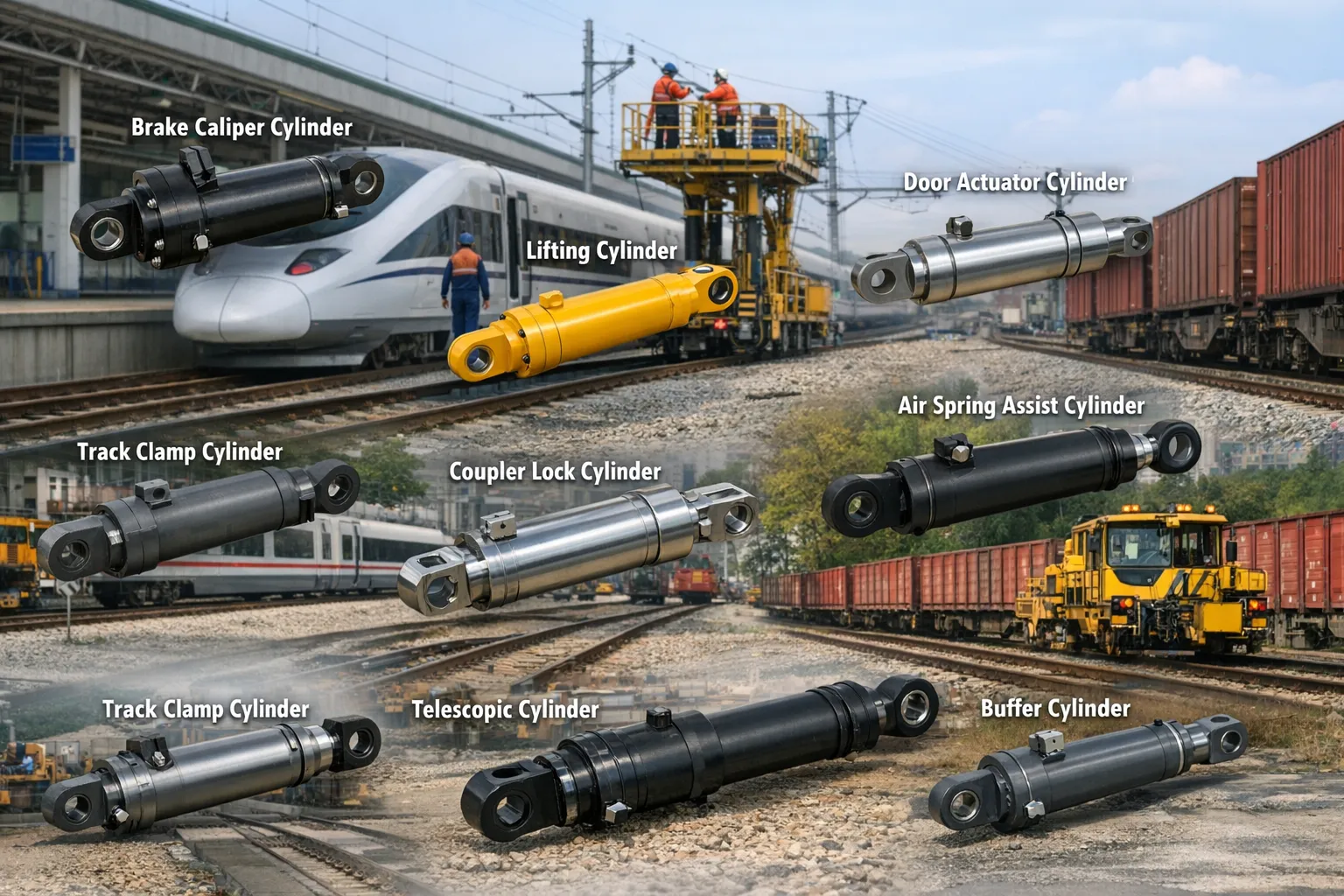
A widespread logistical challenge for maintenance directors is managing the lifecycle of legacy lifting jacks originally outfitted by large multinational conglomerates. When these aging commercial actuators begin to leak fluid or suffer catastrophic rod scoring, sourcing original manufacturer replacements often involves navigating unreasonable lead times and accepting an exorbitant hydraulic cylinder price. Furthermore, attempting fixing hydraulic cylinders that have sustained deep internal barrel gouges is often technically impossible and financially unviable on the depot floor.
We provide a highly efficient, technically superior alternative. Our engineering department specializes in reverse-engineering and manufacturing custom drop-in hydraulic parts that perfectly match the dimensional footprint of major global brands. By carefully analyzing your existing schematics, we ensure exact matching of flange bolt patterns, trunnion pin diameters, closed retracted lengths, and fluid port threading. We regularly supply upgraded replacements for lifting equipment originally manufactured by global brands such as Parker Hannifin, Bosch Rexroth, Enerpac, SMC, and Eaton Vickers.
Disclaimer: The aforementioned brand names and trademarks are the exclusive property of their respective corporate owners. We reference these names strictly for the purposes of dimensional cross-referencing, mechanical compatibility analysis, and to assist facility engineers in correct component selection. We operate as an autonomous, independent hydraulic cylinder manufacturer and hold no formal affiliation with these trademarked entities. Our products are designed to seamlessly replace legacy equipment while significantly upgrading internal tribological performance.
Core Engineering & Technical Advantages
What explicitly differentiates our heavy-duty product from a standard commercial actuator found in a general catalog? The answer lies in a meticulous combination of metallurgical science, precision tribology (the study of friction and wear), and an uncompromising approach to heavy-industry engineering. Here are the core technical advantages of upgrading your systems with our hydraulic rams:
-
1. Extended Guide Anti-Wear Technology
As detailed in our kinematics analysis, the extended internal bearing surface is our primary defense against lateral deflection. By heavily lengthening the internal composite guide distance, it geometrically prevents the piston rod from pivoting under eccentric loads, effectively eliminating the primary cause of rod scoring and seal rupture in synchronized railway lifting systems.
-
2. 27SiMn High-Rigidity Base Metallurgy
Standard industrial fluid power components frequently utilize basic 45# or 1045 carbon steel. We forge our barrels and rods from 27SiMn (Silicon-Manganese alloy steel). This specialized alloy possesses a drastically higher yield and tensile strength. This ensures the cylinder tube will never “balloon” or permanently deform under extreme, unexpected hydrostatic pressure spikes during a heavy chassis lift.
-
3. Ultra-Low Friction Polymer Sealing Matrix
To achieve perfect structural synchronization across a network of jacks, all cylinders must initiate movement simultaneously without the hazardous “stick-slip” phenomenon. We utilize highly advanced PTFE (Teflon) blended step seals combined with resilient elastomeric energizers that provide absolute fluid retention while generating an exceptionally low coefficient of breakaway friction.
-
4. Aggressive Heavy-Duty Particulate Defense
Airborne metallic brake dust is lethal to precision hydraulic parts. Our cylinders feature a heavy-duty, dual-lip polyurethane wiper seal integrated into the external gland. As the rod retracts, the tough outer lip violently scrapes away hardened debris, while the inner lip traps microscopic dust, guaranteeing that the internal hydraulic fluid remains pristine and uncontaminated.
-
5. Deep Penetration Automated Robotic Welding
In high-tonnage lifting applications, traditional tie-rods are highly prone to stretching, which destroys mechanical synchronization. Our cylinders employ a fully welded architectural design. Using automated Submerged Arc Welding (SAW), we achieve incredibly deep and uniform weld penetration at the base and trunnion mounts, ensuring zero structural fatigue even after thousands of heavy load cycles.
-
6. Optimized Thermal Dissipation and Stability
During extensive transit maintenance overhauls, lifting systems may operate repeatedly, generating significant hydraulic fluid heat. Our internal fluid porting geometries are mathematically optimized to reduce fluid turbulence. This rapid heat dissipation prevents the hydraulic oil from losing viscosity and protects the hydraulic cylinder piston seals from premature thermal hardening and cracking.
Autonomous Manufacturing Craftsmanship & Quality Control
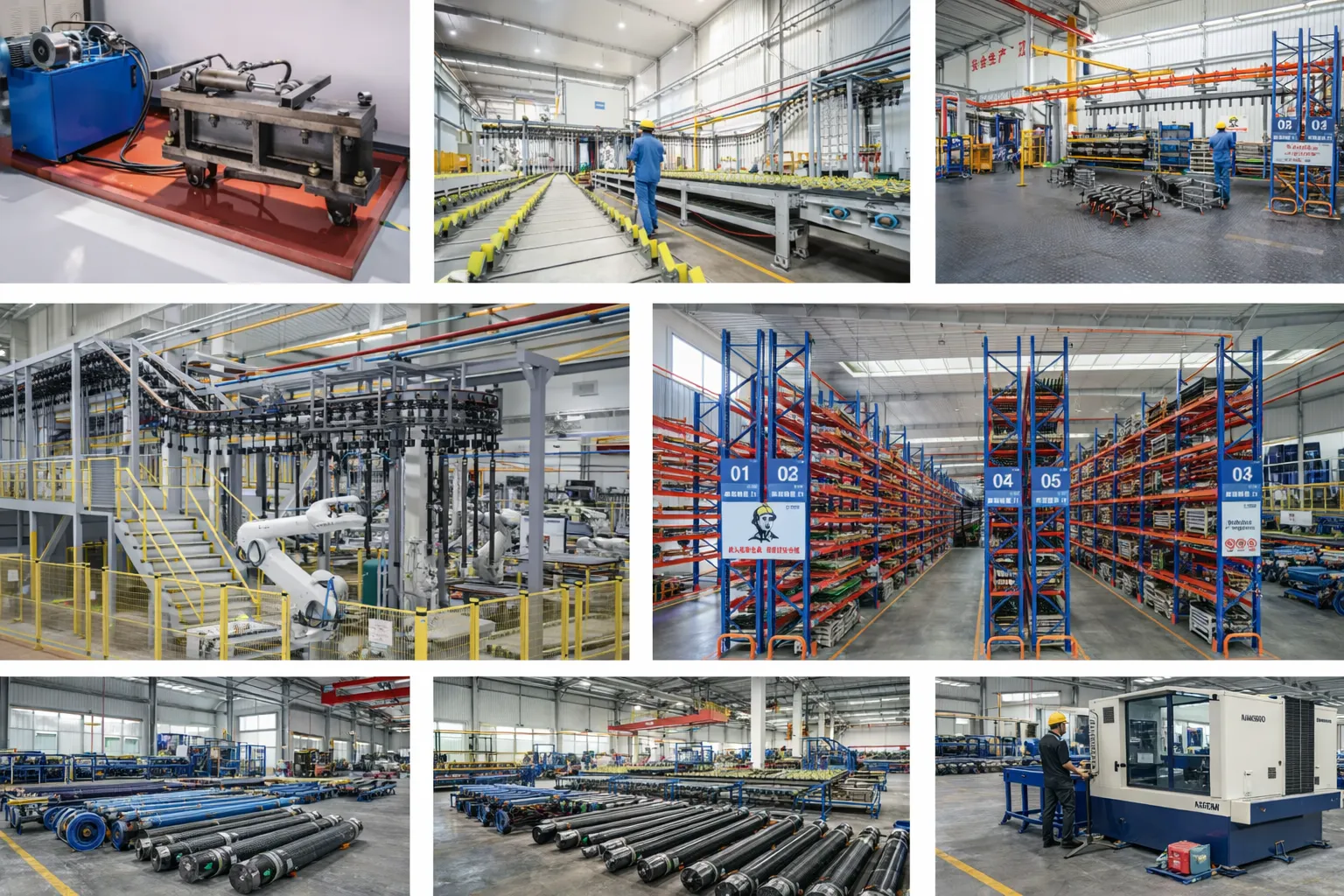
Absolute reliability in heavy industry cannot be achieved through outsourced, fragmented assembly. As a highly integrated, self-sufficient hydraulic cylinder manufacturer, we strictly retain complete autonomous control over every single phase of the production lifecycle. From the initial metallurgical verification of raw steel billets using spectrometry to the final curing of the industrial polyurethane paint, our in-house capabilities ensure uncompromising quality and engineering accountability.
The internal bores of our 27SiMn cylinder tubes undergo a highly specialized skiving and roller burnishing process on state-of-the-art CNC machinery. This creates a highly compressed, mirror-like internal surface finish (Ra ≤ 0.2µm) that dramatically reduces friction and exponentially extends the lifespan of the dynamic seals. Every critical load-bearing structural weld is subjected to rigorous Ultrasonic Non-Destructive Testing (NDT) to guarantee there are zero subsurface voids or slag inclusions.
Our quality assurance protocol culminates in our centralized, high-capacity testing facility. 100% of our production units are subjected to severe hydrostatic testing before crating. We pressurize the cylinders to 1.5 times their maximum rated working pressure and hold them statically to verify zero internal bypass leakage and zero external fluid weeping. Furthermore, every unit is assigned a unique, permanent laser-etched serial number. This vital traceability protocol allows us to instantly retrieve the exact manufacturing blueprint, steel heat batch, and seal profile decades into the future, providing unparalleled rapid support when a client urgently needs specific replacement hydraulic cylinder components for routine depot maintenance.
Broad Spectrum Industrial Applications
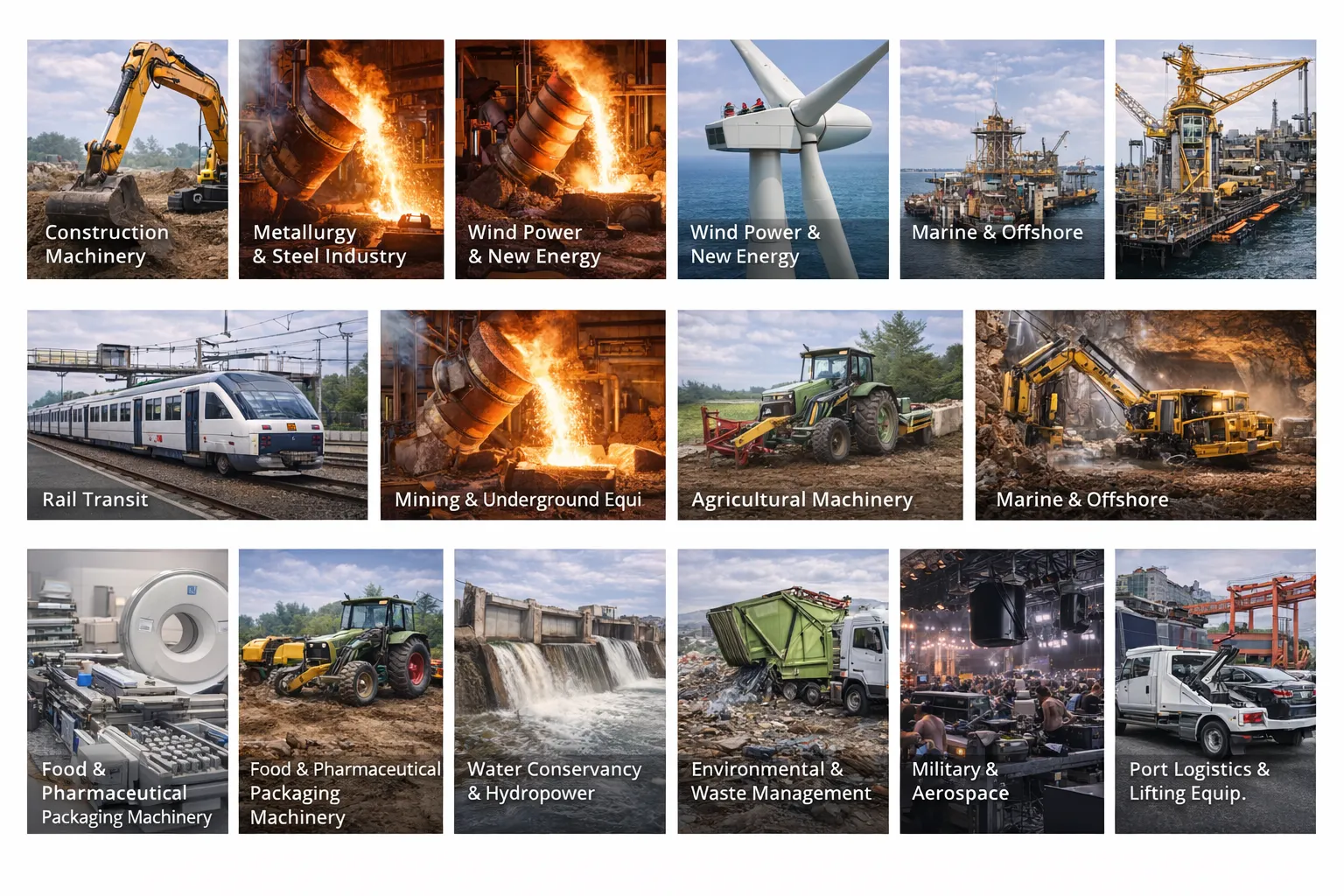
While this highly specialized, extreme-duty architecture was explicitly developed to conquer the unique physical challenges of high-speed railway and metro car lifting, the inherent ruggedness of our extended guide cylinders translates perfectly to other severe-duty industrial sectors worldwide. The capacity to continuously handle severe ground vibration, abrasive airborne dust, and massive vertical loads allows our cylinders to excel across multiple heavy engineering disciplines:
- Metallurgical and Iron Industry: Equipment in steel mills is continuously subjected to extreme radiant heat, massive shock loads, and heavy abrasive slag. Our reinforced 27SiMn structure and advanced scraping seals are highly effective for tilting massive molten steel ladles, operating heavy furnace doors, or driving continuous casting machinery.
- Construction Machinery Industry: Large-scale excavators, articulated off-highway dump trucks, and tunnel boring machines operate in brutal environments characterized by constant mechanical vibration and extreme lateral digging forces. The extended guide technology perfectly stabilizes massive lifting booms working in deep rock quarries.
- Mining Industry: Providing unyielding thrust for subterranean pile drivers and heavy suspension systems operating in extreme moisture and contamination.
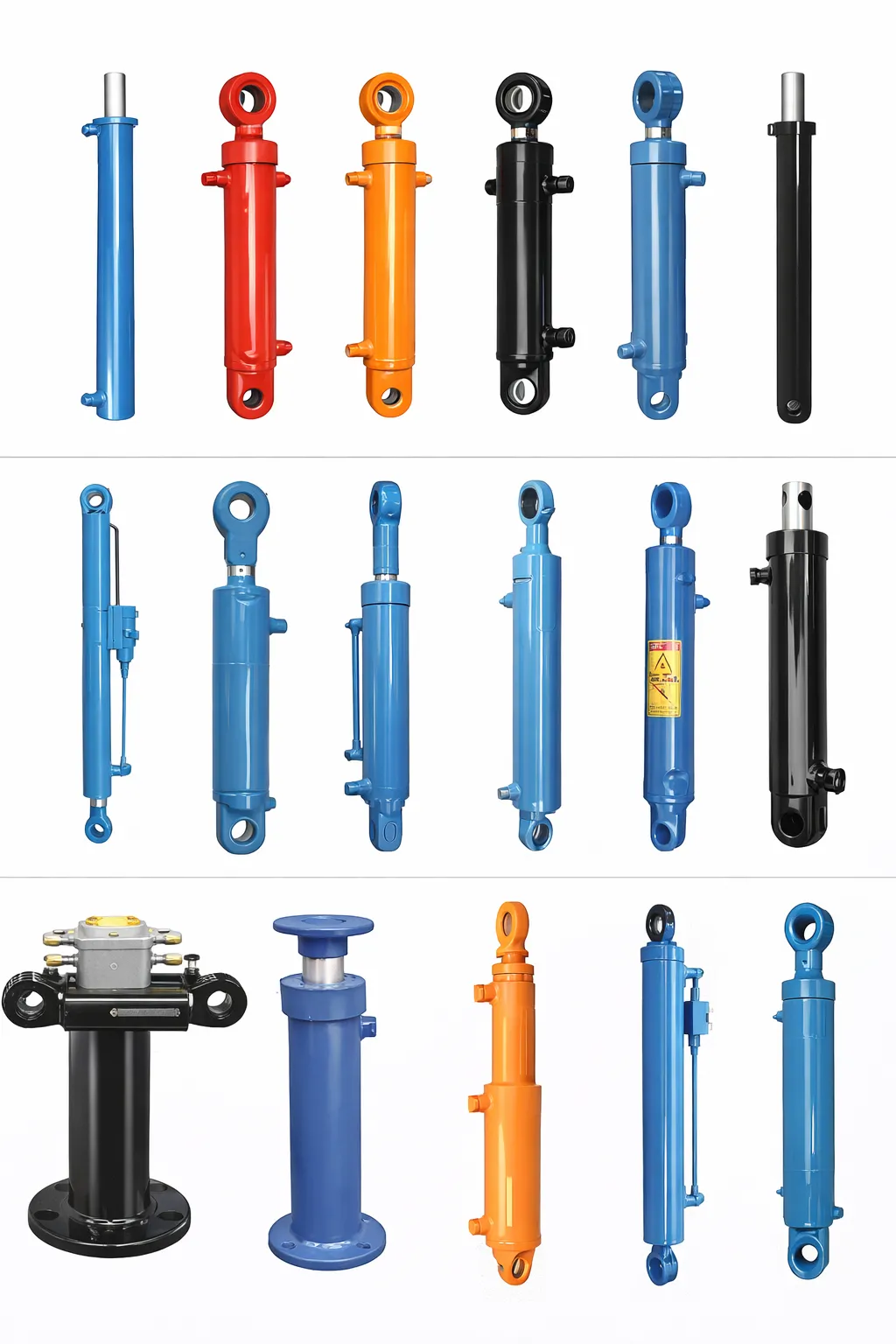
Comparative Analysis: Standard Commercial vs. Our Railway Lift Cylinder
When evaluating the total cost of ownership over a 10-year depot lifecycle, the initial purchase price is merely a fraction of the total economic equation. The table below illustrates the critical engineering differences that make our application-specific cylinders a vastly superior long-term investment compared to standard industrial variants.
| Engineering Metric | Standard Commercial Cylinder | Our Specialized Lift Cylinder |
|---|---|---|
| Base Material Choice | 1045 or Q345 Carbon Steel (Prone to yield under pressure spikes) | 27SiMn Alloy Steel (Exceptional yield strength and fatigue life) |
| Internal Guide Structure | Standard narrow width bronze ring (Highly susceptible to point-loading) | Extended Guide Layout (Diffuses lateral forces over a massive area) |
| Sealing Tribology | Standard NBR seals causing high breakaway friction (Stick-Slip issues) | PTFE-blended step seals enabling perfectly smooth, synchronized lifting |
| Dust & Debris Defense | Basic single-lip wiper seal allowing grit ingress over time | Aggressive dual-lip polyurethane scraping architecture |
| Long-Term Economic Value | Frequent seal replacements required; high ongoing hydraulic cylinder repair costs | Extremely low maintenance intervention; vastly superior return on investment |
Real-World Case Studies: Asian Market Success
The definitive proof of our fluid power engineering methodology is found in the operational successes of our clients. Below are detailed accounts of how our cylinders have successfully modernized critical transit infrastructure across the highly advanced rail networks of East Asia.
Case Study 1: KTX High-Speed Rail Maintenance Depot
Location: Seoul, South Korea | Application: 8-Point Synchronized Carriage Lifting Jacks
The Challenge: The facility was suffering from chronic rod wear on their existing European-brand cylinders. The severe ground vibrations from adjacent active tracks induced micro-lateral shifts during lifting operations. This caused the cylinder rods to score deeply against the glands within just 14 months of operation, leading to unacceptable fluid leaks, hazardous drops in system pressure, and forced safety shutdowns.
The Discovery & Solution: The chief facility engineer found us through an online search for a specialized hydraulic cylinder manufacturer capable of custom engineering. We designed a batch of replacement lift cylinders featuring our proprietary extended guide design and 27SiMn alloy bodies, matching the exact mounting footprint of their legacy equipment for a seamless drop-in install.
The Result: The new cylinders were installed during a holiday maintenance window in early 2024. After 24 months of heavy, continuous operation, ultrasonic rod inspections revealed absolutely zero wear. The depot completely eliminated lifting-related downtime and realized a 40% saving on their annual hydraulic cylinder price procurement budget.
“The custom double acting hydraulic cylinder units provided by your factory completely eradicated the lateral load damage we were fighting for years. The structural build quality is noticeable, and the direct engineering support we received before ordering gave our team complete confidence.” — Mr. Park, Lead Maintenance Engineer.
Case Study 2: Urban Metro Fleet Servicing Infrastructure
Location: Busan, South Korea | Application: Underfloor Bogie Drop Table Systems
The Challenge: A busy subway car repair depot urgently needed to upgrade their underground lifting systems. They faced chronic issues with extreme coastal humidity and severe abrasive metallic dust from brake pads causing rapid contamination of their hydraulic fluid and subsequent seal degradation. Furthermore, space in the concrete pit was highly restricted, requiring an extremely compact yet high-tonnage actuator.
The Solution: Recommended by an Asian transit consultancy firm, they reached out to our engineers. We provided a customized, shortened wide-bore version of our cylinders. To combat the hostile environment, we significantly upgraded the hard chrome plating thickness and implemented our aggressive dual-wiper seal system.
The Result: The custom compact hydraulic parts integrated perfectly into the confined pits. The dual-wiper design successfully prevented all fluid contamination, extending the hydraulic oil lifecycle dramatically and entirely eliminating the seal weeping that plagued their previous units.
Case Study 3: High-Speed Rail Assembly Plant
Location: Taoyuan, Taiwan | Application: Final Assembly Chassis Positioning
The Challenge: A major rail manufacturer required ultra-reliable hydraulic rams to hold multi-ton train chassis at precise elevations for up to 12 hours while complex undercarriage welding and bogie fastening took place. Their previous standard cylinders experienced internal fluid bypass, causing the load to slowly drift downward during assembly shifts, which was absolutely unacceptable for worker safety.
The Solution: We engaged with their purchasing team at an industrial B2B expo. We supplied heavy-bore cylinders engineered with specialized zero-leakage pilot-operated check valves (PO Check Valves) directly flanged to the steel cylinder body, combined with precision-honed internal barrels to ensure perfect seal seating.
The Result: The assembly plant achieved perfect altitude holding capabilities. The safety inspectors highly praised the zero-drift performance during multi-hour continuous assembly shifts, vastly improving the factory’s safety compliance record.
Case Study 4: Heavy Freight Locomotive Overhaul Shop
Location: Incheon, South Korea | Application: Mobile Locomotive Lifting Jacks
The Challenge: Freight locomotives are drastically heavier than standard passenger cars. This facility experienced terrifying issues with their standard tie-rod cylinders physically stretching and losing synchronization under the massive load, posing an immediate and severe safety hazard to the technicians.
The Solution: We swiftly replaced the inadequate units with our heavy-duty, fully welded structure hydraulic parts. By relying on our deep-penetration submerged arc welding techniques on 27SiMn steel rather than weak tie-rods, we provided a completely unyielding lifting structure.
The Result: The complete elimination of cylinder stretch meant that all jacks moved at exactly the same synchronized rate, restoring full safety compliance to the heavy maintenance bays and expediting their fixing hydraulic cylinders turnaround times.
Expert FAQ: Technical & Procurement Inquiries
Specifying mission-critical heavy industrial fluid power components involves rigorous engineering due diligence. Below, we have provided comprehensive answers to the most common technical queries we receive from mechanical engineers and B2B procurement specialists regarding our lifting solutions.
1. Exactly how does the extended guide prevent rod wear during train lifting?
When a multi-ton train body shifts even a fraction of an inch during lifting, it creates a powerful lateral side load on the extended piston rod. In physics, Pressure = Force / Area. Standard guide rings are too narrow, meaning this lateral force creates immense point-pressure that breaks the oil film, causing the rod to scrape heavily against the metal gland. Our extended guide significantly increases the internal bearing surface area. This geometrically distributes that lateral force over a much wider footprint, safely keeping contact pressures low, maintaining perfect rod concentricity, and effectively preventing wear.
2. From a metallurgical perspective, why use 27SiMn alloy steel over standard 45# carbon steel?
27SiMn (Silicon-Manganese alloy steel) fundamentally alters the structural integrity of the cylinder. It possesses a much higher yield strength (resistance to permanent deformation) compared to common 1045 or 45# carbon steels. In the context of a heavy-duty lift cylinder, this means the cylinder wall can safely withstand aggressive hydrostatic pressure spikes without micro-expanding (ballooning), ensuring the dynamic seals never lose their high-pressure interference fit against the barrel wall.
3. Can you guarantee dimensional matching with our existing European brand lifting jacks?
Absolutely. A massive segment of our manufacturing operation involves engineering drop-in replacements for aging transit infrastructure. If you provide us with the original OEM part numbers, physical schematics, or exact measurements (pin-to-pin distance, trunnion diameter, stroke length, and port threading), our engineers will manufacture new hydraulic cylinder components that fit flawlessly into your current jack housings without requiring any structural steel modifications to your depot.
4. How do your cylinders ensure perfect synchronization across 8 independent lifting points?
While electronic synchronization is managed by your external pumping PLC, the mechanical actuators must respond identically to the fluid flow. We achieve this by CNC-honing our internal bores to identical micro-tolerances across the entire batch, ensuring identical volumetric fluid capacities. Furthermore, we utilize ultra-low friction PTFE step seals on the hydraulic cylinder piston to eliminate the mechanical “stick-slip” friction that causes mechanical lag at the initial moment of lifting.
5. What specific variables determine the final hydraulic cylinder price for a depot upgrade?
Because we operate as a direct hydraulic cylinder manufacturer, we completely eliminate expensive intermediary distributor markups. The final hydraulic cylinder price is driven purely by the physical dimensions (bore and stroke), the specific metallurgical grade required (like utilizing 27SiMn), the complexity of the customized mounting trunnions, and the order volume. We guarantee highly competitive factory-direct pricing while adhering to the strictest heavy-industry safety standards.
6. Are these heavy-duty units suitable for standard in-house hydraulic cylinder repair?
Yes. Despite their rugged, deep-penetration welded construction, the front sealing gland is explicitly designed to be removable using standard heavy engineering tools. This thoughtful accessibility ensures that when the time eventually comes, your own on-site maintenance technicians can quickly replace the seals or inspect the internal bore, performing fixing hydraulic cylinders procedures without needing to ship the massive unit back to the manufacturing factory.
7. What is the standard production lead time for a custom batch shipping to Asia?
Standard production lead times typically vary from 25 to 35 working days, depending on our current factory capacity and the exact bespoke specifications of your order. Because we completely control the machining, robotic welding, and pressure testing processes in-house, we can frequently expedite critical replacement orders. Ocean freight to major transit ports like Busan, Incheon, or Yokohama is highly efficient, usually adding only a few days to the delivery timeline.
Ready to Upgrade Your Railway Maintenance Lifting Systems?
Do not allow inferior, commercially standard cylinders to compromise the safety of your personnel or the operational efficiency of your high-speed train depot. When elevating critical transit infrastructure, partner with an authoritative hydraulic cylinder manufacturer capable of delivering equipment that is meticulously engineered to survive the harshest conditions.
Editor: Cxm