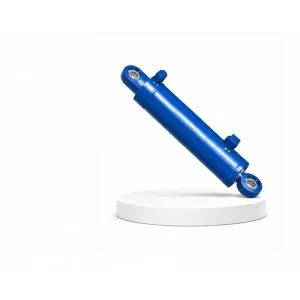
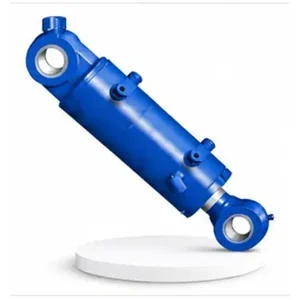
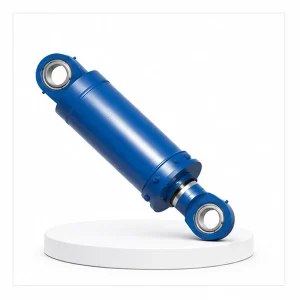
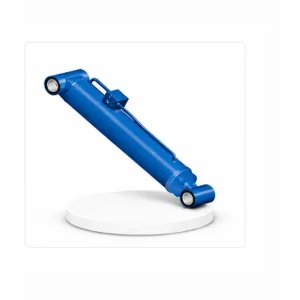
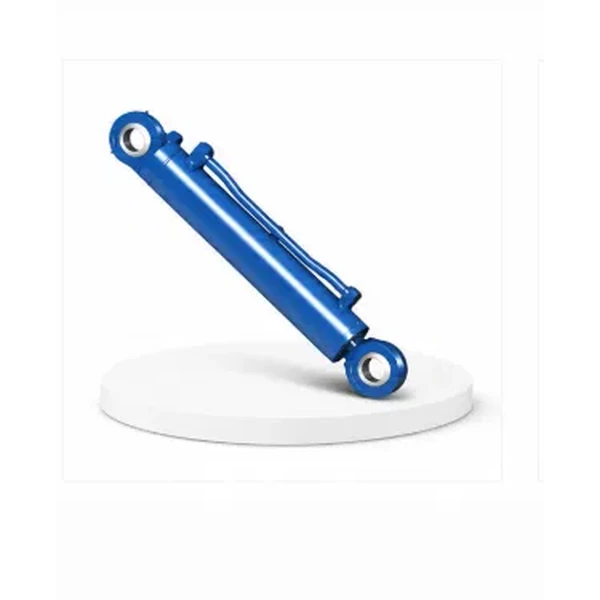
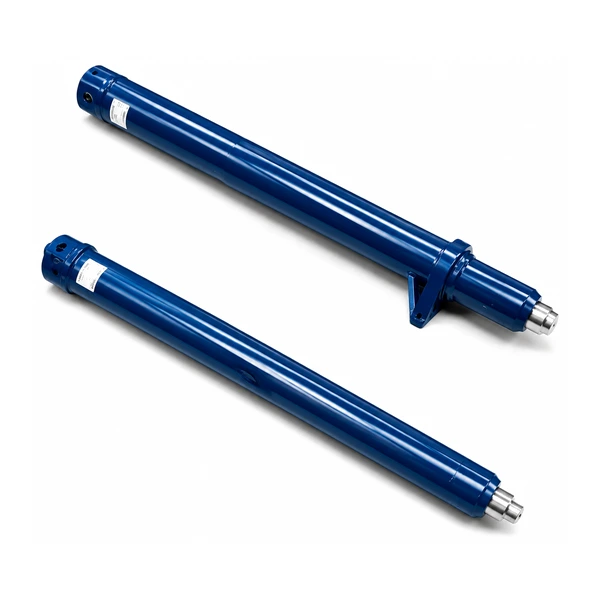
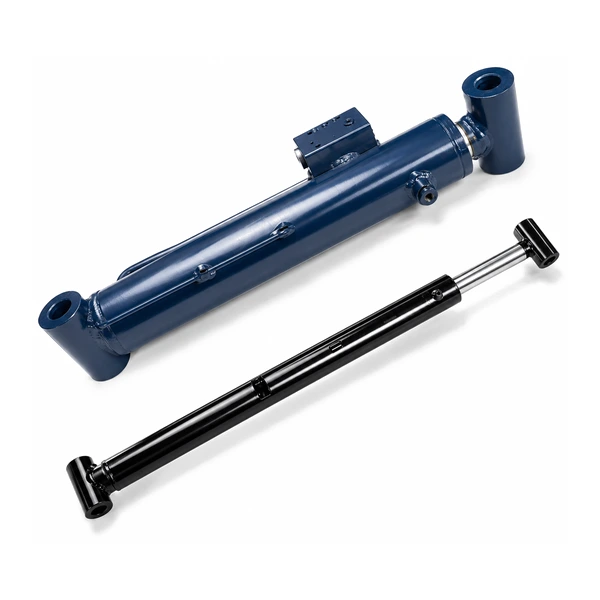
Mining Dump Truck Steering Cylinder
Mining Truck Steering vs Crane Steering — Different Vehicle, Different Physics
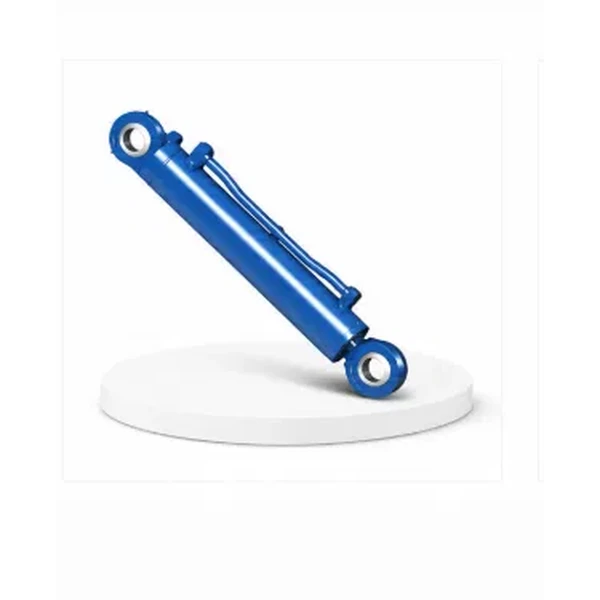
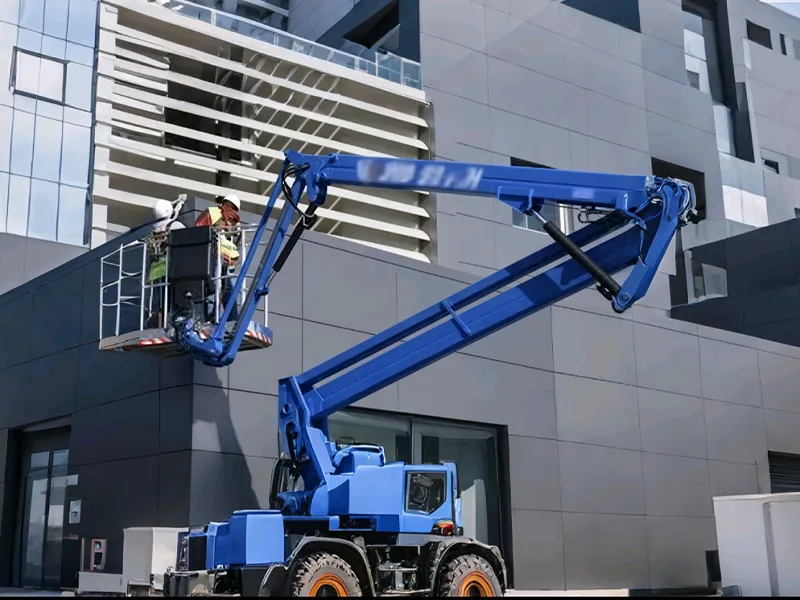
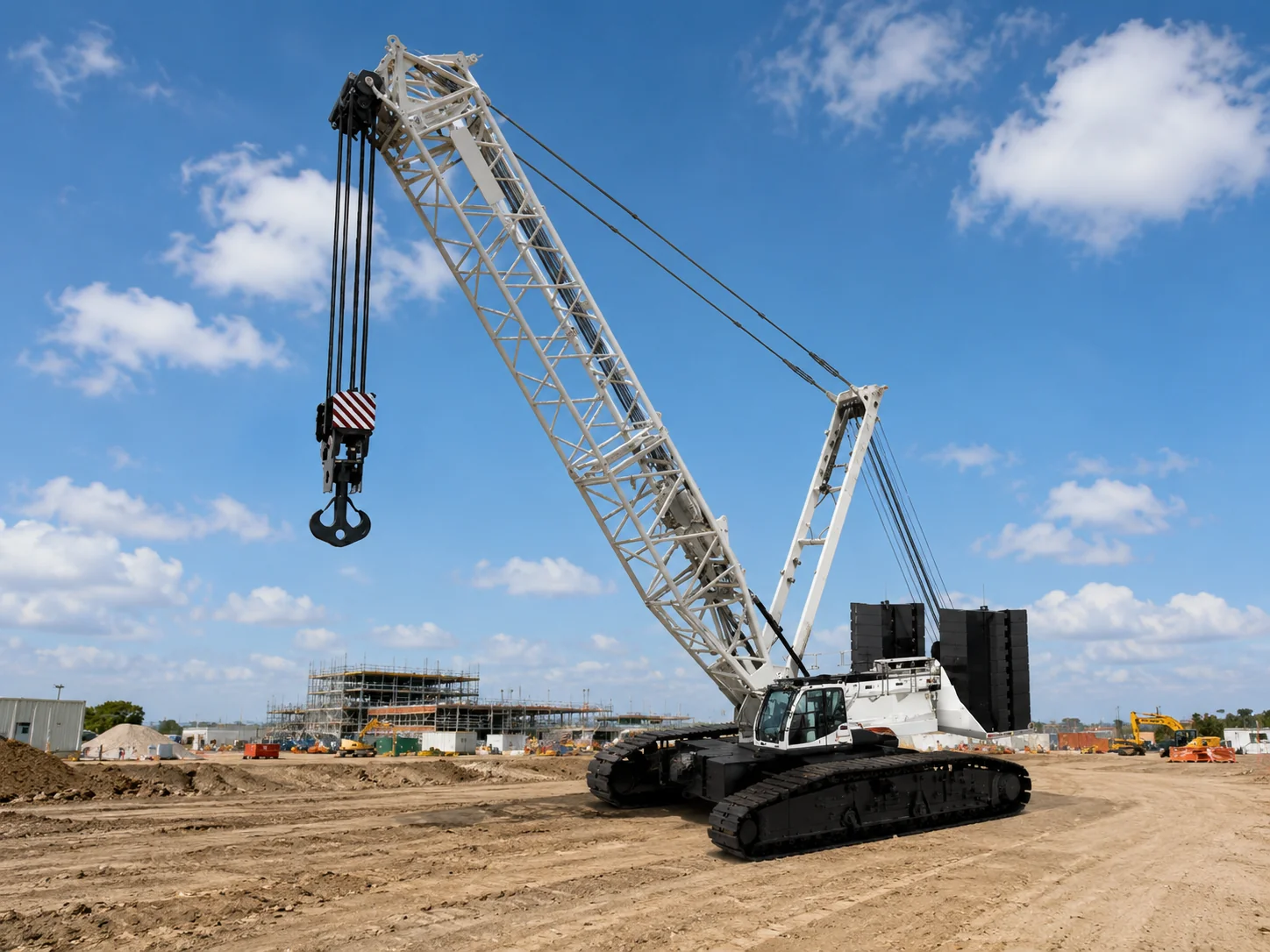
The mobile crane steering cylinder (#23) turns individual wheels on paved roads — low friction, moderate speed, precision angle control for each of up to 18 steerable wheels. The mining truck steering cylinder operates in a completely different regime: unpaved haul roads with loose gravel, mud, and ruts — surface friction 3–5× higher than asphalt. Tyres are 2.7–4.0 metres in diameter with contact patches exceeding 1 square metre — the scrubbing force to rotate these tyres on a gravel surface is enormous.
On rigid-frame mining trucks (the most common configuration for ultra-class haul trucks), two steering cylinders are connected to the front axle's steering linkage — similar in concept to a road truck but 10–20× the force. On articulated trucks, the steering cylinders are even larger: they pivot the entire front chassis section relative to the rear section at a central hinge joint — a fundamentally different steering architecture that requires longer stroke (up to 2,000 mm) and higher force.
Korea Ever-Power manufactures steering cylinders for both configurations as the second of five mining dump truck hydraulic cylinders.
Technical Specifications
| Parameter | Specification |
|---|---|
| Product | Mining Dump Truck Steering Cylinder |
| Function | Wheel steering assistance |
| Bore Diameter | 63 mm – 210 mm |
| Rod Diameter | 40 mm – 100 mm |
| Stroke | ≤ 2,000 mm |
| Thrust Force | Maximum 779 KN (bore 210 mm / 22.5 MPa) |
| Application | Mining Dump Truck (rigid frame & articulated) |
| Certification | ISO 9001 · 100% hydrostatic tested |
779 KN — Why Steering a Mining Truck Requires 80 Tonnes of Force
The steering force is proportional to the tyre-to-surface friction, the axle load, and the scrub radius. On a mining truck:
Each front tyre is 2.7–4.0 metres in diameter and 0.9–1.7 metres wide. The contact patch with the road surface exceeds 1 square metre per tyre. Rotating this contact patch against a gravel surface requires a scrubbing force of 50–200 KN per tyre — the energy to shear and displace the gravel under the rubber. Two front tyres = 100–400 KN of tyre scrub resistance alone.
A loaded 400-tonne mining truck can place 150–200 tonnes on the front axle. This axle load presses the tyres deeper into the unpaved surface, increasing the rolling resistance and the scrub force. Steering at low speed (approaching the loading shovel, navigating the dump point) when the tyres are nearly static requires the highest force — the static friction coefficient exceeds the dynamic coefficient by 20–40%.
The steering cylinder's 779 KN thrust is amplified (or reduced) by the steering linkage geometry. The linkage converts the linear cylinder force into a rotational torque at the steering knuckle. Korea Ever-Power calculates the required cylinder force from the truck OEM's linkage geometry, tyre specification, maximum axle load, and worst-case surface friction. Contact the Korea Ever-Power engineering team for mining steering force calculations.
Manufacturing Process
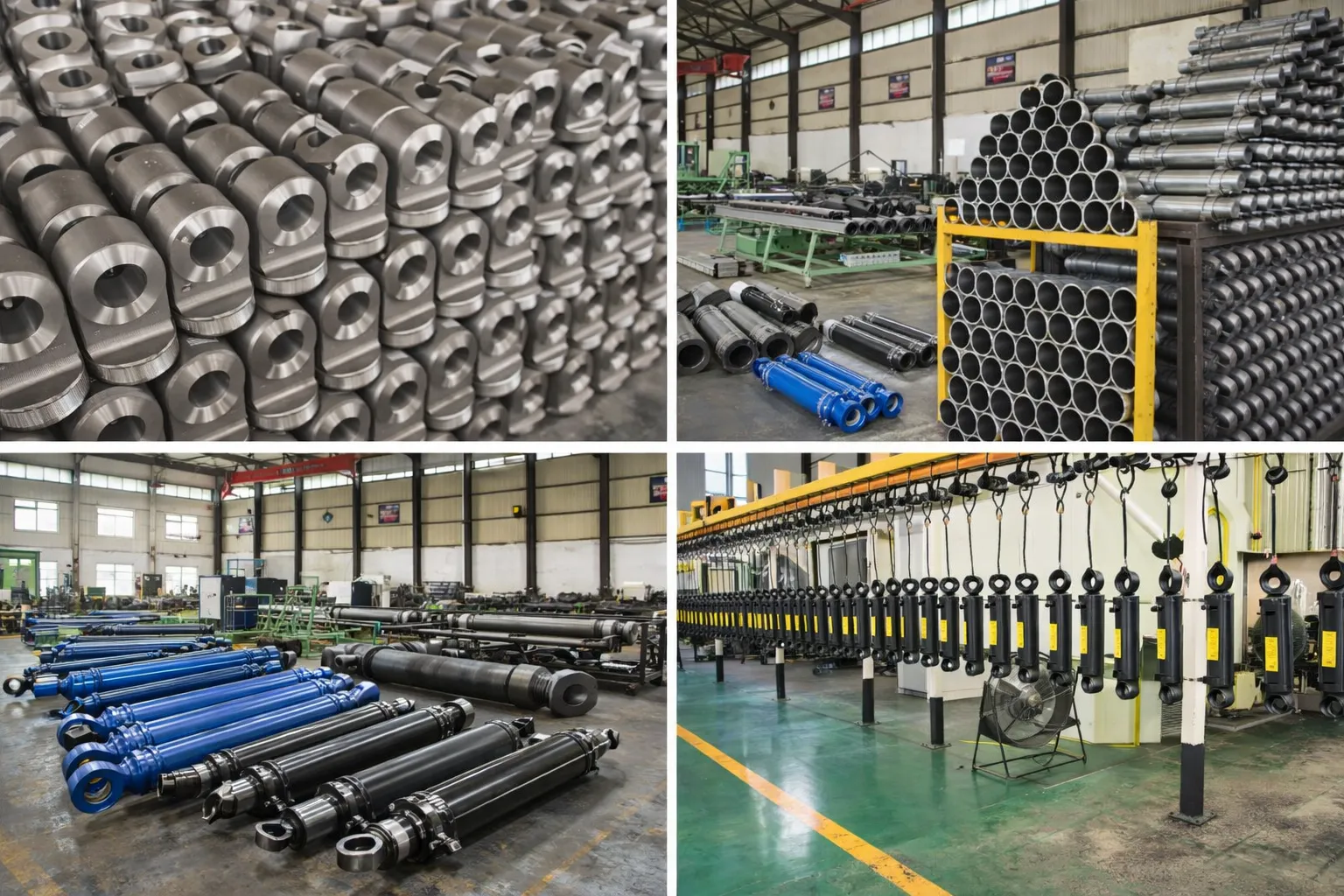
The steering cylinder bore (63–210 mm) is honed to Ra 0.2–0.4 µm. Chrome plating is 80 µm minimum — the mining standard, driven by silica-dust abrasion on the exposed rod. Rod eye bearings are heavy-duty spherical joints rated for the combined thrust, side-force, and vibration loads of mine-site haul-road travel. The rod eye pin bore is machined to H7/g6 for the truck OEM's steering linkage pin.
Seals are polyurethane with quad-lip wipers, rated for -40 °C to +100 °C and designed for silica-dust contamination resistance. Every steering cylinder is hydrostatic tested at 1.5× rated pressure, drift-tested (verifying the steering hold position under axle load without creep), and response-time tested — ensuring the steering responds immediately to driver input without dead-band or lag. Matched sets of 2 cylinders per truck are supplied.
OEM & ODM
FAQ
Related Categories
Další informace
| Editor |
|---|