LS-HCZD30N-03 Forklift Truck Steering Cylinder
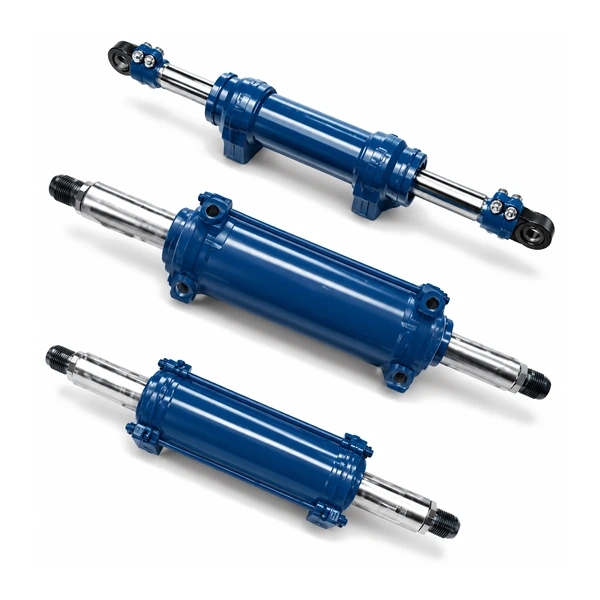
LS-HCZD30N-03 Forklift Truck Steering Cylinder
When a forklift's steering feels heavy, pulls to one side, or develops a visible oil film around the steering cylinder rod, the cause is almost always internal seal wear inside this cylinder. The LS-HCZD30N-03 is the double-acting steering cylinder fitted to specific 3-tonne class counterbalance forklift platforms — the actuator that translates the hydraulic output of the orbital steering valve into the left-right push-pull motion that turns the rear wheels.
Korea Ever-Power produces this cylinder as an OEM-grade replacement. Every critical dimension — bore, rod diameter, stroke, closed length, pin centres, port thread, and port angular position — is matched to the original equipment specification. The replacement forklift steering cylinder installs in the same mounting brackets, connects to the same hydraulic hoses, and operates with the same steering feel as the factory-original unit.
Product Specification — LS-HCZD30N-03
| Part Number | LS-HCZD30N-03 |
| Product Type | Forklift truck steering hydraulic cylinder |
| Acting Type | Double-acting (required for bidirectional steering) |
| Target Platform | 3-tonne class counterbalance forklifts |
| Structure | Piston cylinder — single-rod or dual-rod per OE configuration |
| Body Material | 20# carbon steel / 45# medium carbon steel |
| Rod | C45 induction-hardened + hard chrome (20 μm min.) |
| Seal Options | Parker, NOK, Hallite, Busak Shamban |
| Certification | ISO 9001:2015, ISO 14001, ISO 45003 |
| Quality | 100% pressure + leakage tested · Test certificate provided |
| Compatibility | Direct replacement — matches OE bore, stroke, ports, mounting |
| MOQ | 1 piece |
| Warranty | 1 year against manufacturing defects |
| Shipping | Crate or carton · Port: Shanghai / Ningbo |
Five Warning Signs That Your Steering Cylinder Needs Replacement
Steering cylinder failure is progressive — it does not happen suddenly. The cylinder gradually loses sealing performance over thousands of operating hours, and the symptoms build slowly enough that operators adapt their driving habits to compensate, often without reporting the problem until the steering becomes genuinely unsafe. Recognising these symptoms early prevents a steering failure during loaded travel.
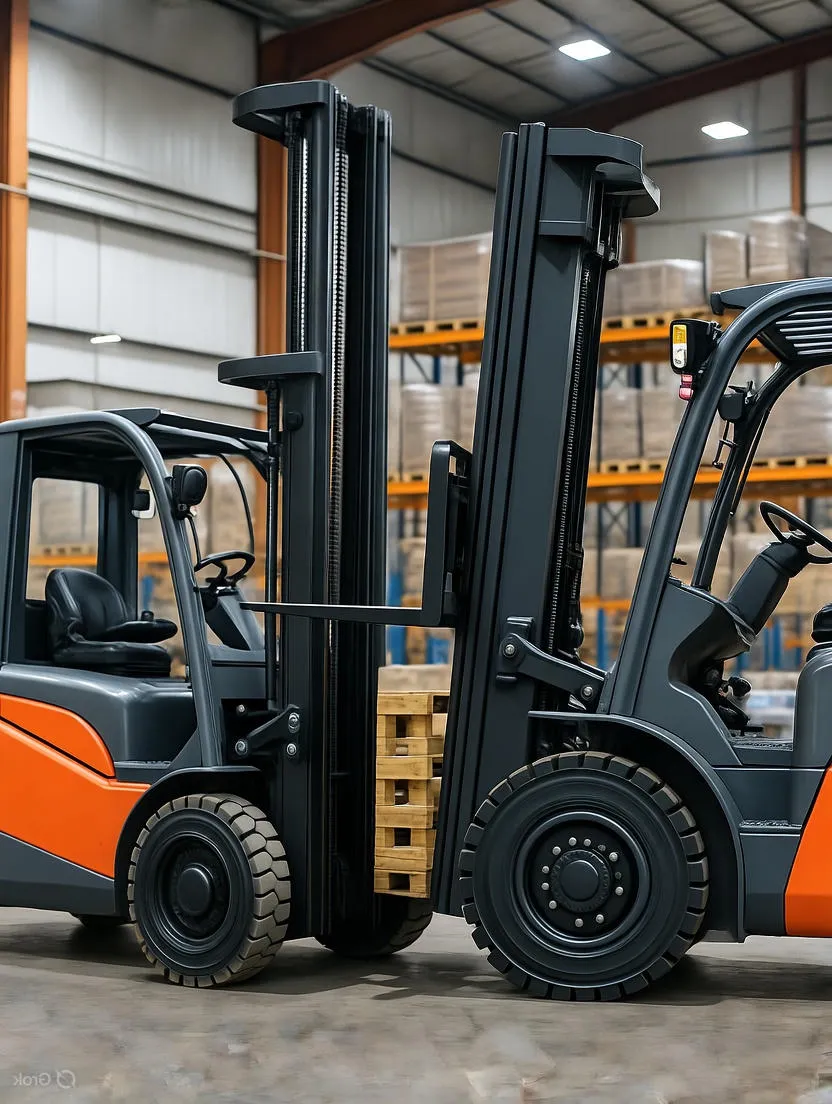
The steering wheel becomes harder to turn over weeks or months. The operator needs more force and more turns to reach full lock. This indicates internal seal bypass — oil is leaking past the piston inside the cylinder, so less hydraulic force reaches the steering linkage. The orbital valve pumps the same volume, but a portion bleeds across the piston instead of pushing the rod.
When the steering wheel is centred and the forklift is parked, the rear wheels slowly drift to one side over minutes. This means the piston seal bypass rate is higher on one side of the piston than the other — oil leaks from the pressurised side to the unpressurised side, pushing the rod and the wheels off-centre.
Visible oil on the cylinder rod or pooling beneath the rear axle is the clearest external sign of rod seal failure. The rod seal is the barrier between the pressurised bore and the atmosphere — when it fails, oil weeps past the rod on every steering stroke. This is never cosmetic — it represents a progressive loss of hydraulic fluid that will eventually cause steering performance degradation and potential environmental contamination.
A noticeable delay between turning the steering wheel and the wheels actually responding. This can indicate air in the cylinder bore (from a leaking rod seal allowing air ingress during the retract stroke), or it can indicate excessive internal leakage allowing the piston to compress the oil volume before building enough pressure to move the load.
Knocking, clicking, or groaning sounds when turning at low speed. Knocking usually indicates a worn clevis pin or spherical bearing in the cylinder mounting — not the hydraulic seals. Groaning typically indicates cavitation from air ingress. Both require inspection: the cylinder may need a new pin and bearing set, a rebuild, or a full replacement depending on the wear pattern found during disassembly.
Understanding the Part Number — What LS-HCZD30N-03 Tells You
Chinese forklift OEM part numbers follow naming conventions that encode functional information. While the exact encoding varies between manufacturers, the LS-HCZD30N-03 part number reveals its purpose through its component segments.
| Segment | Likely Meaning |
|---|---|
| LS | Manufacturer or product line prefix |
| HC | Hydraulic Cylinder |
| ZD | Steering / Zhuan Direction |
| 30N | 3.0-tonne rated capacity, N-series platform revision |
| 03 | Component variant or engineering revision number |
If your forklift carries a different part number but serves the same 3-tonne class steering function, the cylinder may share identical dimensions. Send the part number, forklift model, and serial number to Korea Ever-Power — we can cross-reference it against our validated dimensional database within 24 hours and confirm whether the LS-HCZD30N-03 is a dimensional match or whether a custom-dimensioned cylinder is required.
Where This Cylinder Fits in the Forklift Steering System
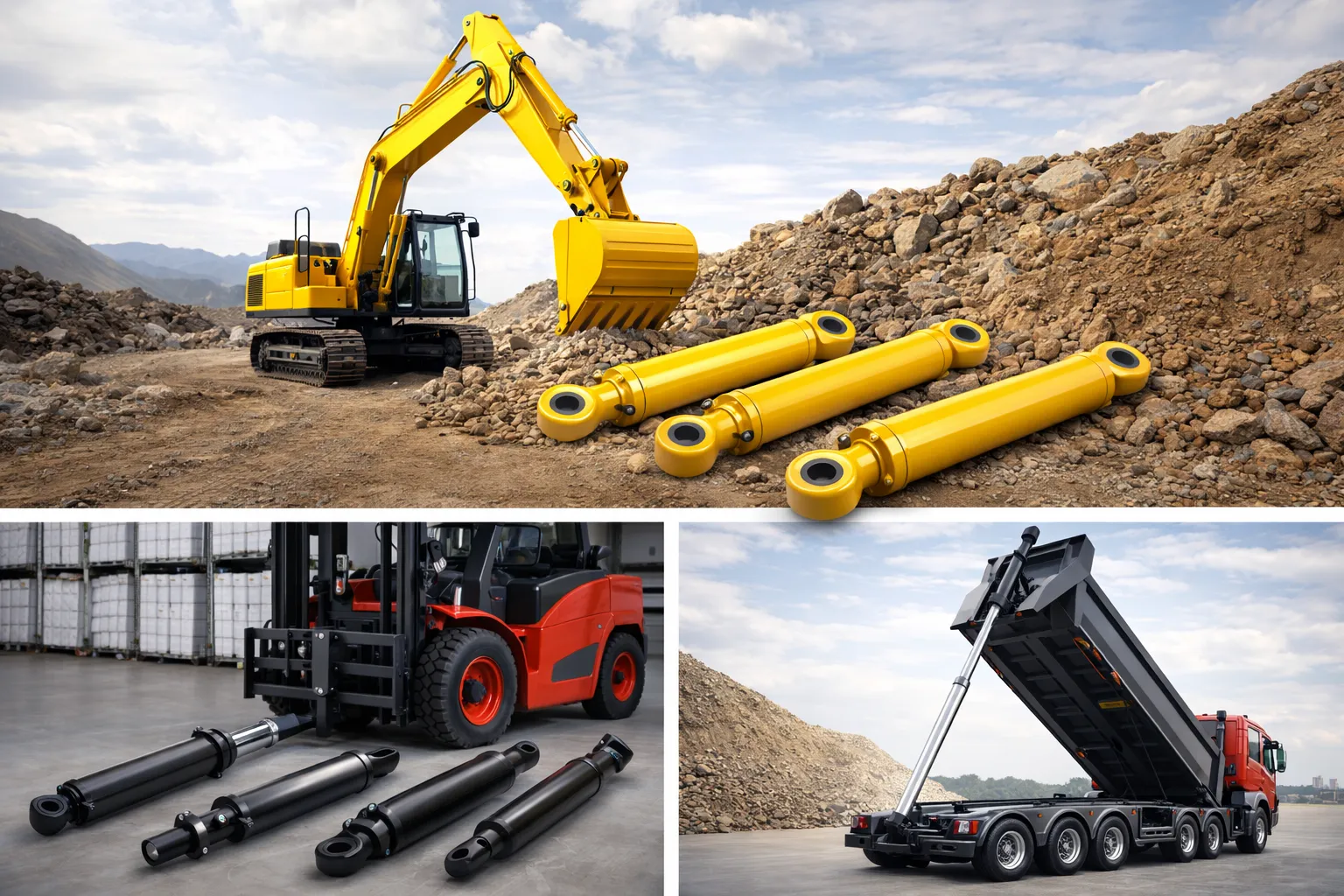
The LS-HCZD30N-03 is one component in a closed-loop hydrostatic steering circuit. Understanding the circuit helps diagnose whether the cylinder is the actual fault source or whether the problem originates elsewhere in the system.
Upstream: Orbital Valve → Cylinder
The orbital (gerotor) valve meters a fixed volume of oil per steering wheel revolution (typically 100–160 cc/rev for 3-tonne class). If the cylinder's internal leakage exceeds the valve's displacement, steering response degrades — more turns per degree of wheel angle. Before replacing the cylinder, verify that the orbital valve output is within specification by measuring the flow rate at the cylinder port with the hoses disconnected.
Downstream: Cylinder → Tie Rods → Wheels
The cylinder rod pushes and pulls the steering tie rods through a ball-joint linkage. Worn ball joints, bent tie rods, or a damaged steering knuckle create mechanical resistance that the cylinder must overcome — making the steering feel heavy even when the cylinder is functioning correctly. Inspect the linkage for wear and play before attributing heavy steering to the cylinder.
Precision Manufacturing for Steering Cylinders
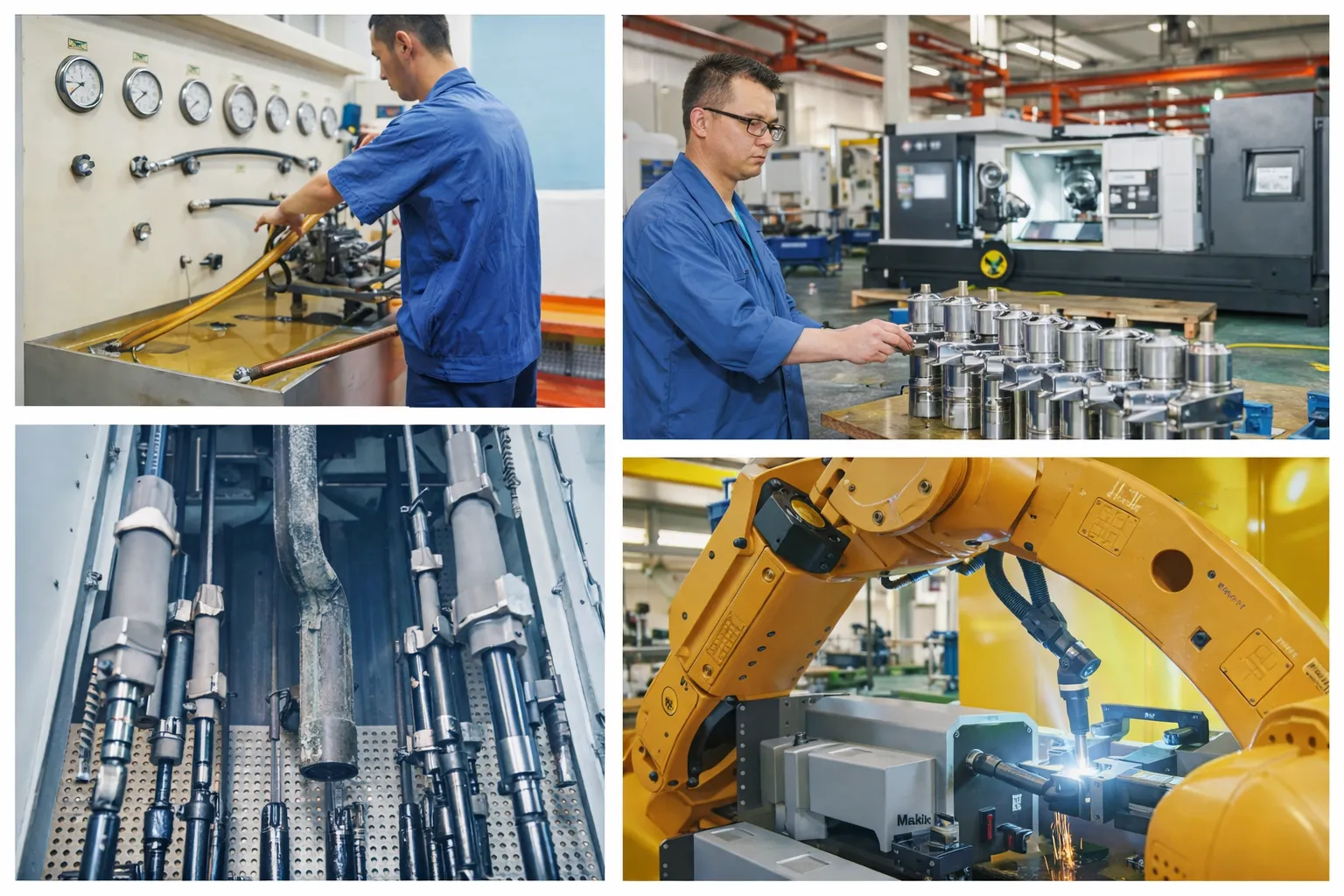
Steering cylinders demand tighter manufacturing tolerances than lift or tilt cylinders because the operator feels every imperfection directly through the steering wheel. A bore surface that is 0.1 μm rougher than specification creates a perceptible increase in steering effort. A rod that is 0.02 mm out of concentricity creates a pulsing feel at the wheel that worsens at higher steering speeds. Korea Ever-Power machines steering cylinder bores to Ra ≤ 0.3 μm (tighter than the ≤ 0.4 μm standard for lift cylinders) and maintains rod concentricity within 0.01 mm TIR — ensuring the replacement cylinder delivers the same smooth, precise steering feel as the original equipment.
LS-HCZD30N-03 Steering Cylinder — Technical Questions
Customer Reviews
Verified Purchase · May 2025
We have a fleet of Lonking 3-tonne forklifts and the steering cylinders on three of them started leaking around the same time — all around 7,000 hours. The OEM wanted us to buy through the dealer network which meant waiting and paying premium. Sent the old cylinder dimensions to Ever-Power, they confirmed the LS-HCZD30N-03 was a match. Ordered 3 units, all arrived within 3 weeks. Our mechanics installed them in about 40 minutes each. Steering feel is exactly the same as the originals. Very satisfied.
Verified Purchase · January 2025
Cylinder quality is fine, no complaints there. Took a bit of effort to bleed the air out after installation — probably 20 minutes of lock-to-lock cycling. My only suggestion: it would help if the cylinder came with a simple installation instruction sheet, even a single page with the bleeding procedure. Not everyone replacing these is an experienced hydraulic technician. Four stars because the product is good but the customer experience could be a touch more complete.
Verified Purchase · March 2025
We are a forklift parts distributor in Bangkok. Started ordering steering cylinders from Ever-Power 8 months ago and now carry 12 different part numbers in stock. The LS-HCZD30N-03 is one of our best sellers — fits several Chinese-brand 3-tonne trucks that are very common in the Thai market. Quality is consistent across batches. Our return rate is under 1%, which is better than some OEM parts we've handled. Good business partner.
Verified Purchase
Replaced the steering cylinder on our HELI CPC30 that had been getting progressively harder to steer for the past 6 months. Night and day difference with the new Ever-Power unit. Steering is light and precise again. The operator actually thanked me — he thought that's just how the forklift was supposed to feel after 8 years. No, it was just a worn cylinder.
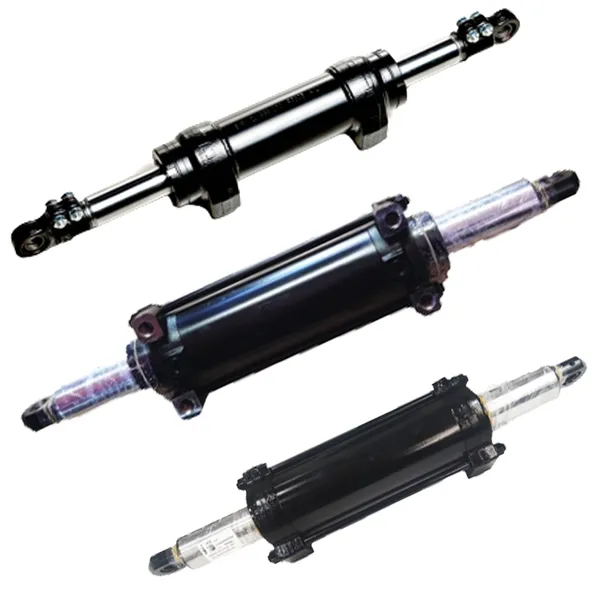
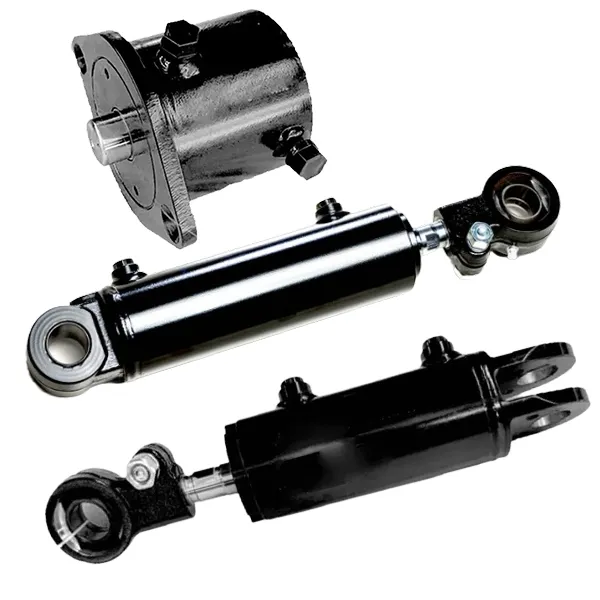
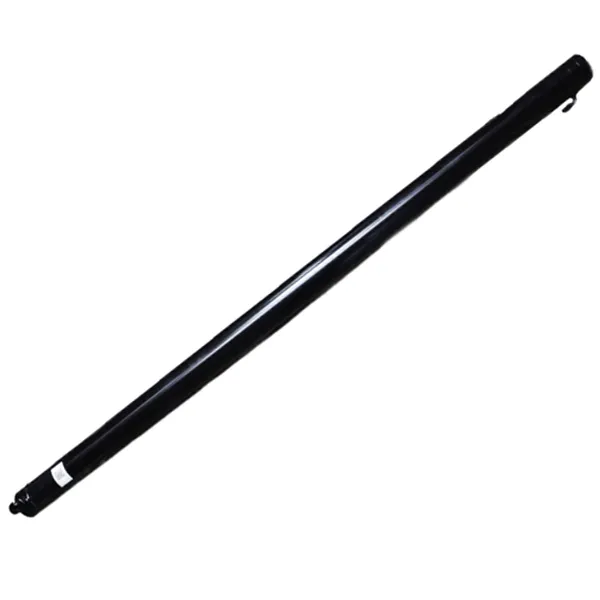
Other Forklift Cylinder Types
Additional information
| Editor | Cxm |
|---|
Related products
-

Forklift Steering Cylinder | EP-HCYY11112002 Model
-
20176B-02000 Forklift Truck Support Hydraulic Cylinder
-
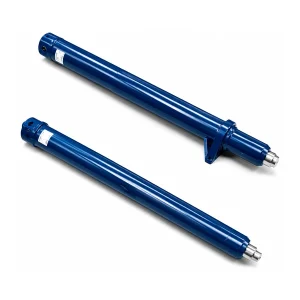
Custom Hydraulic Lift Cylinder — OEM Lift Cylinder with Integrated Check Valve and Sprocket for Forklifts
-
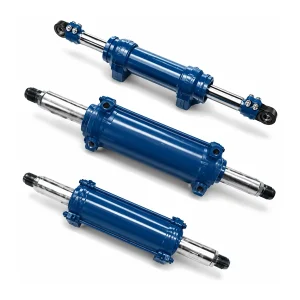
Tractor & Forklift Hydraulic Steering Cylinder — OEM Cross-Industry Power Steering Cylinder
-
Custom Hydraulic Cylinder for Forklift Steering
-
Forklift Short Lifting Hydraulic Cylinder — Free-Lift Cylinder with Integrated Check Valve and Sprocket System
-
Forklift Short Lifting Hydraulic Cylinder
-
Forklift Steering Hydraulic Cylinder